
Williamson County
According to projections by the Texas State Demographer's office, Williamson County could be home to 1.3 million people by 2060 — roughly the same number of people living in Travis County now. Small towns have exploded into sprawling suburbs, and they've sometimes struggled to provide municipal services in an environmentally protective way. For more than a decade, the treated wastewater that Liberty Hill discharges into the South San Gabriel Rivers created a suffocating blanket of algae that stretched for miles downstream (shown in the photo at the top of this page). However, the amount of wastewater that Liberty Hill produces could be just a fraction of the wastewater that active and pending wastewater permits could discharge into Salado Creek. The decisions that Williamson County officials are making now are creating the infrastructure that the county' residents will have to live with for decades to come.
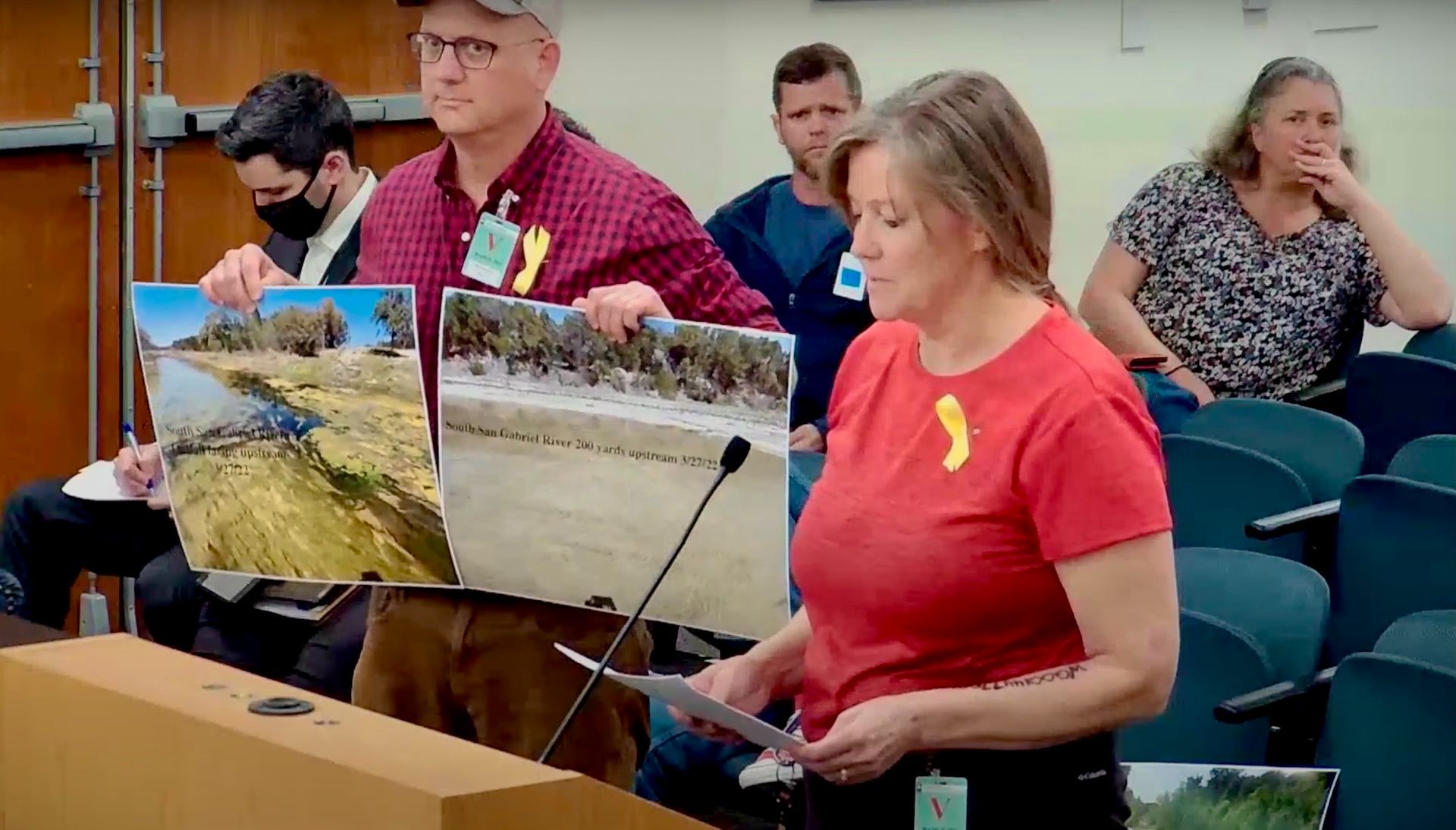
WHAT WE DO: Save Texas Streams and our partners provided support for the efforts of Stephanie Ryder Morris (shown speaking at a 2022 TCEQ meeting) to get stricter requirements included in Liberty Hill's wastewater permit. Morris lived across the South San Gabriel from Liberty Hill's wastewater outlet, and she saw firsthand how it caused persistent and excessive algae growth in the river.
WHAT'S THE LATEST? The two most advanced wastewater permit applications on Salado Creek are for Mustang Springs and The Reserve on Salado Creek. TCEQ's commissioners will discuss the Mustang Springs application at their meeting on November 19. Save Texas Streams asked local legislators to request that TCEQ hold a public meeting on the application for The Reserve on Salado Creek. A date for this meeting has not yet been scheduled.
WHAT'S HAPPENING? A total of 10 wastewater discharge permits in the Salado Creek watershed have either been approved by TCEQ or are currently pending with the agency — currently one of the greatest concentrations of new permits anywhere in the state. Most of the permits are near the city of Florence in northern Williamson County, and the town of Salado in southern Bell County.
WHAT'S THE PROBLEM? Salado Creek meets the standards for being protected as a pristine stream, according to research by Ryan King of Baylor University. If all 7 of the pending permit applications are approved by TCEQ's commissioners, a combined volume of almost 8 million gallons of treated wastewater per day could be discharged into Salado Creek. By contrast, Liberty Hill has been discharging only around 1 million gallons of treated wastewater per day into the South San Gabriel River, which is also a pristine stream, and this has caused miles of excessive algae growth that has persisted for more than a decade.
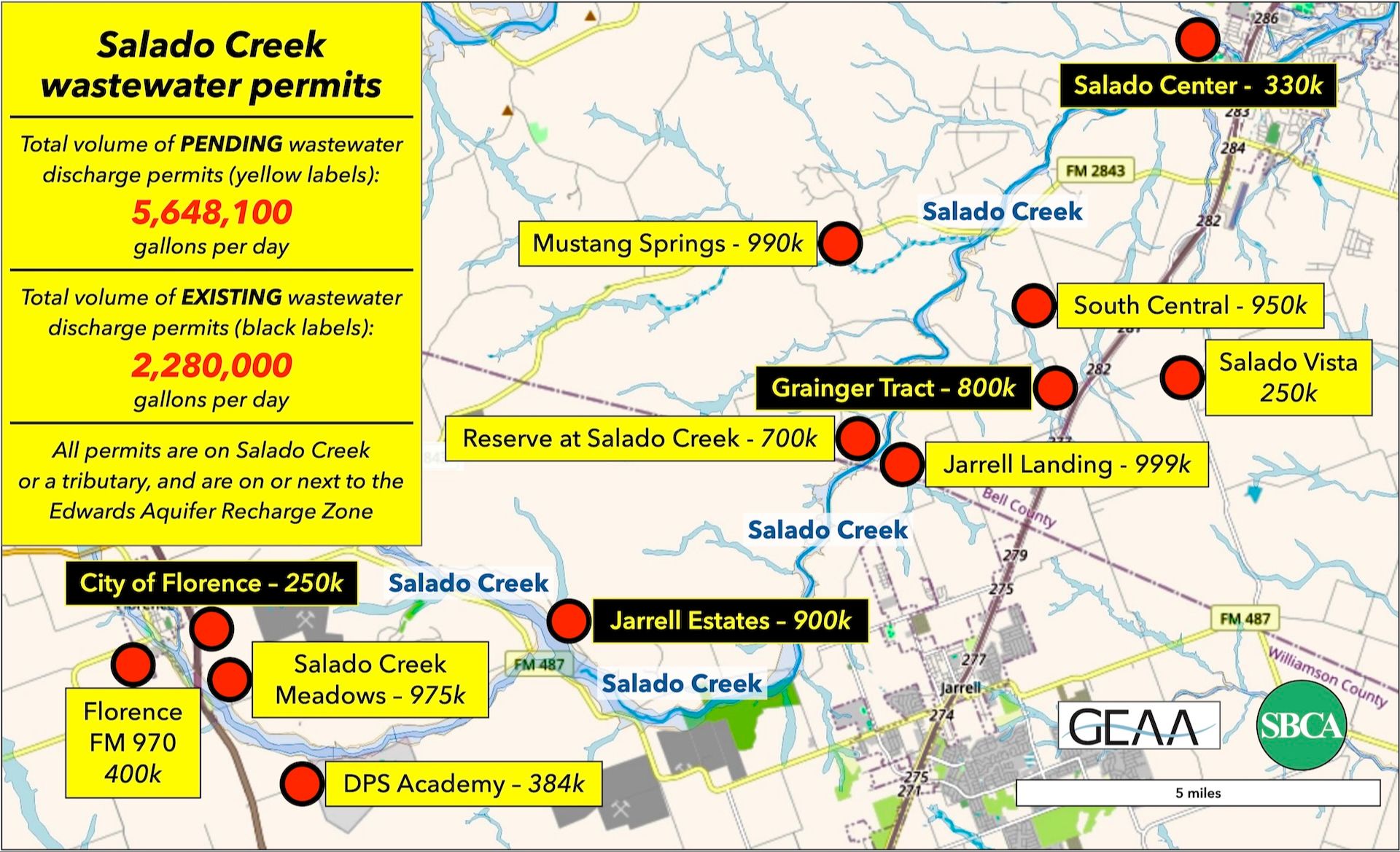
Several of the pending wastewater discharge permits around Salado Creek are also in the Recharge Zone of the Edwards Aquifer. In 1996, TCEQ banned new wastewater permits in the Edwards Recharge Zone south of the Colorado River. If that ban had been extended to the full extent of the Recharge Zone north of the Colorado River, most of the current permits on Salado Creek could not be issued by TCEQ. Further, while TCEQ still issues TLAP irrigation permits in the southern extent of the Edwards Recharge Zone, it only approves one type of dispersal method — surface spray irrigation — but not the other — subsurface drip irrigation. TCEQ's rationale for not approving subsurface drip over the Recharge Zone is the same reason it doesn't issue wastewater discharge permits in this area — in order to protect the water supply for millions of Texans who get their water from wells drilled in the Edwards Aquifer.
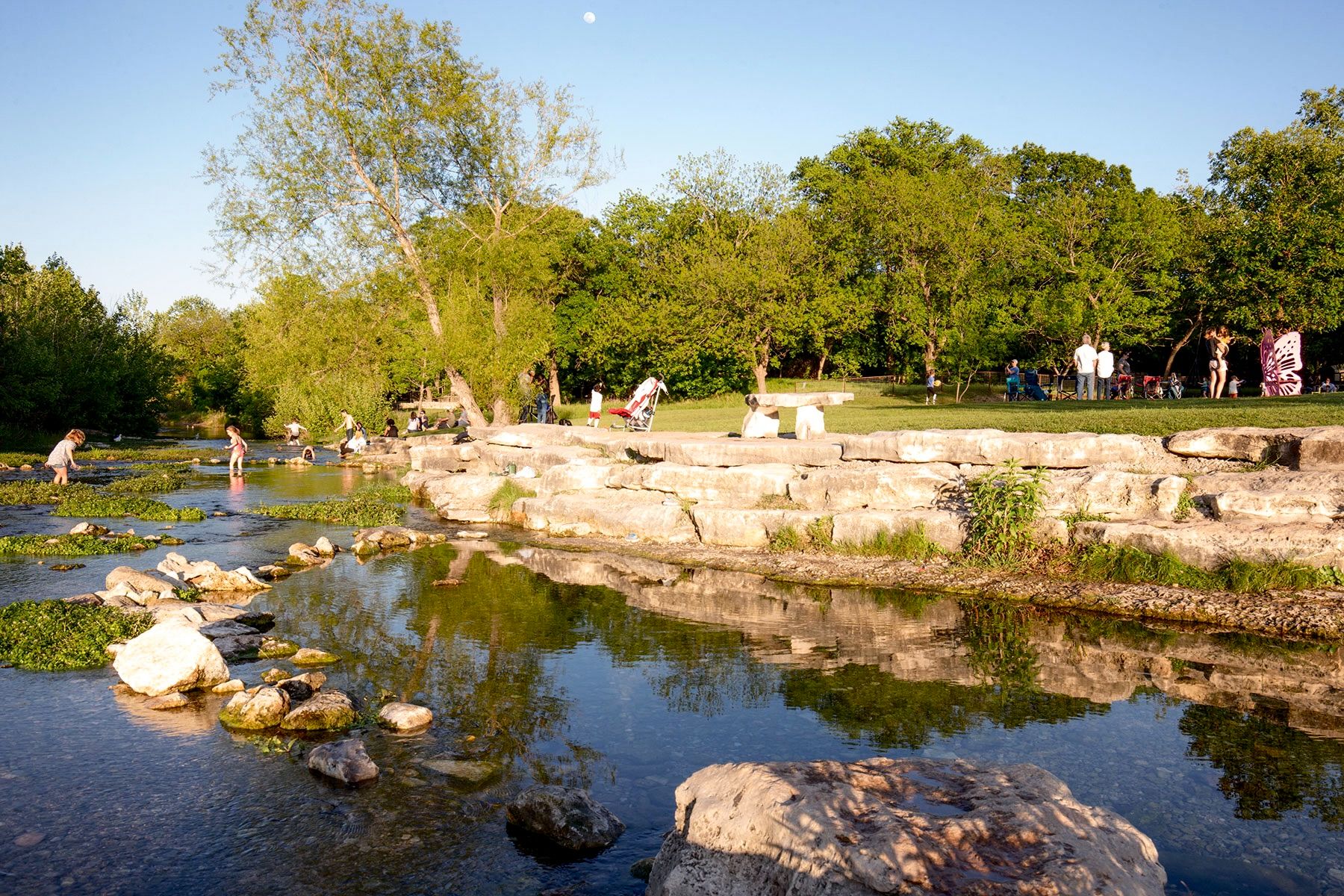
Salado Creek, which could soon be receiving up to 8 million gallons of treated sewage per day, flows through the village of Salado in Central Texas. The town is a popular destination with attractions such as the famous Stagecoach Inn, first constructed in 1852.
WHAT'S THE LATEST? TCEQ has started a possible enforcement action for Liberty Hill's discharge permit since the city has yet to comply with its new phosphorus limit.
WHAT'S HAPPENING? For years, the worst sewage pollution in Texas has been caused by the treated wastewater that the city of Liberty Hill, located west of Georgetown, has been discharging into the South San Gabriel River. The problem has beeen that Liberty Hill's wastewater contained more phosphorus than what’s naturally in the river. Phosphorus acts as a fertilizer that causes plants to grow, including algae. The result has been that the South San Gabriel, which meets the criteria for a pristine stream, has been blanketed with miles of excessive algae growth for more than a decade.
In 2024, TCEQ's commissioners took a historic step by renewing Liberty Hill’s discharge permit with the agency's lowest-ever limit on the amount of phosphorus that can remain in wastewater after treatment. The commissioners voted unanimously to re-issue the city's discharge permit with a total phosphorus limit of 20 micrograms per liter (mcg/L). The agency’s previous lowest limit for phosphorus in a discharge permit was 150 micrograms per liter. You can watch the video recording of the commissioners’ meeting here.

This montage of consecutive segments from a drone video shot by Ryan King in 2020 showed how excessive algae grew on the South San Gabriel for miles downstream from Liberty Hill's wastewater discharge outlet, located at the midpoint of the photo at far left.
The effort to improve Liberty Hill's permit took almost a decade and started with complaints submitted to TCEQ by Stephanie Ryder Morris, who lived directly across the South San Gabriel from the city's wastewater outlet. When Liberty Hill filed for renewal of its permit, Morris and her downstream neighbors asked that a contested case hearing be held. TCEQ's commissioners eventually ordered that an extremely rare second contested case hearing should be held in order to specifically determine what the phosphorus limit should be in Liberty Hill's permit in order to stop the growth of excessive algae on the South San Gabriel.
Save Texas Streams coordinated a fundraising campaign that enabled Morris and her legal team to retain Ryan King of Baylor Univeristy, a nationally recognized water quality expert, for the second hearing. King's testimony and evidence was key in convincing TCEQ's commssioners to renew Liberty Hill's permit with an unprecedentedly low phosphorus limit of 20 micrograms per liter. Other major funders who contributed to King's testimony included the Jacob and Terese Hershey Foundation, the Hill Country Alliance, and the Llano River Watershed Alliance. Save Texas Streams also presented Morris with our Pristine Streams Protector award in 2023 for her many years of volunteer advocacy on behalf of the South San Gabriel.