
Barton Creek
Our organization was founded in 1979 to protect Barton Creek, and it remains one of our top priorities. We worked for the creation of the Barton Creek Greenbelt and the Barton Creek Habitat Preserve in the 1990s. We have supported the conservation efforts of Shield Ranch, the largest undeveloped property in the creek's watershed. In 2021, we successfully opposed a permit application for a wastewater discharge permit on the Long Branch tributary of Barton Creek, which would have allowed treated sewage to be dumped into the creek for the first time ever. And we are currently opposing two pending permits for wastewater irrigation facilities that would be located too close to Barton Creek.
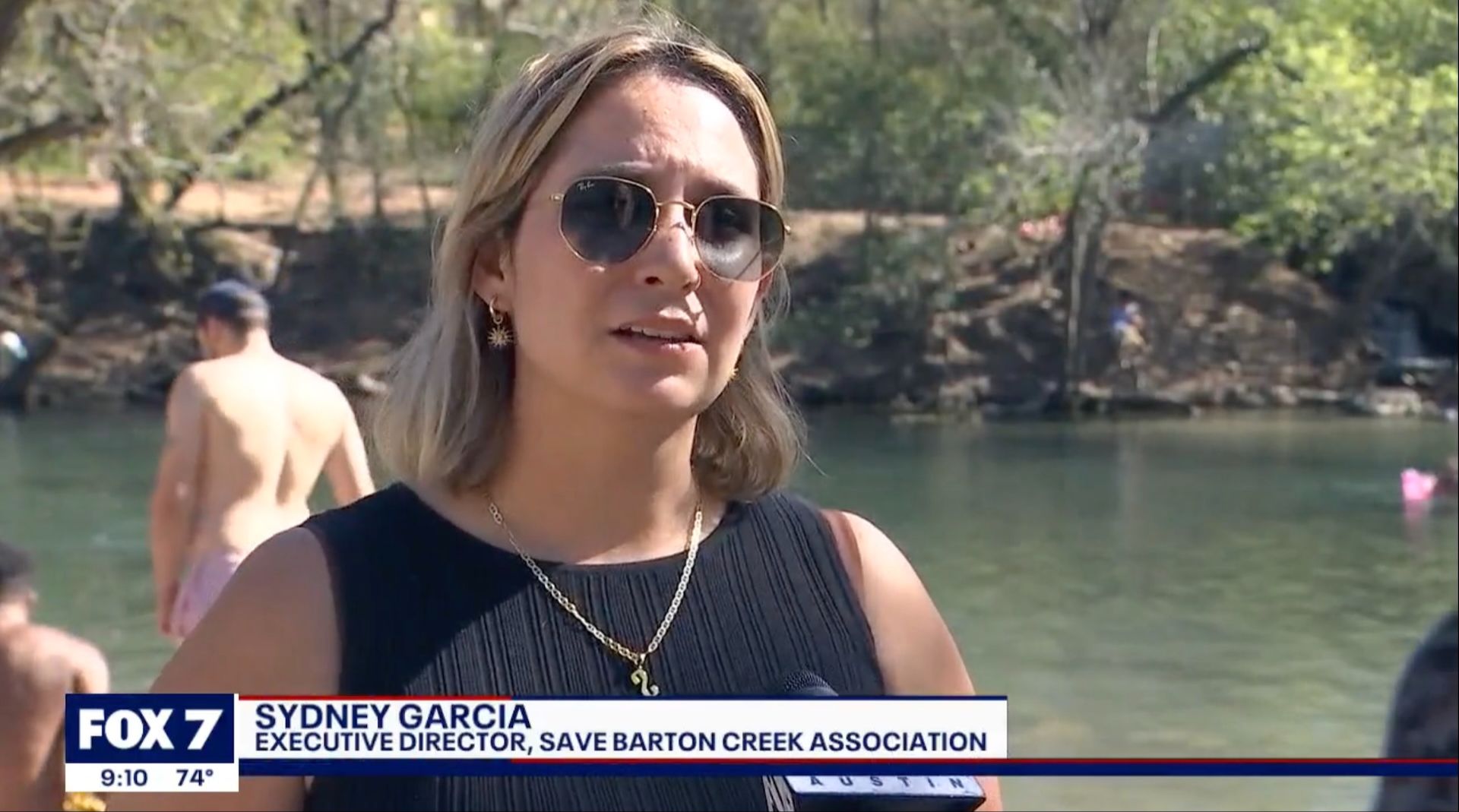
WHAT WE DO: Save Texas Streams' previous Executive Director Sydney Garcia was interviewed at Barton Creek about the Pristine Streams Petition that our organization and other Hill Country groups and landowners filed with TCEQ in 2022.
White Rocks Resort
WHAT'S THE LATEST? TCEQ's staff is working on an official response to public comments submitted on the draft wastewater irrigation permit for the White Rocks resort. Once TCEQ issues its response, local landowners will have the option of requesting a contested case hearing on the permit.
WHAT'S HAPPENING? Because wastewater discharge permits can cause pollution in pristine streams like Barton Creek, Save Texas Streams supports the increased use of wastewater irrigation permits. Unfortunately, we’ve seen several recent applications for irrigation permits in bad locations, including the White Rocks luxury resort that developer Chris Milam wants to build on State High 71 in western Travis County. Milam's plans include an upscale hotel and condo towers that would be located on top of one the tallest hills in Travis County. Milam also wants to build an onsite sewage facility that would spread up to 120,000 gallons of treated wastewater per day on irrigation fields around White Rocks. The resort would be located between two ravines that drain downhill to Barton Creek.
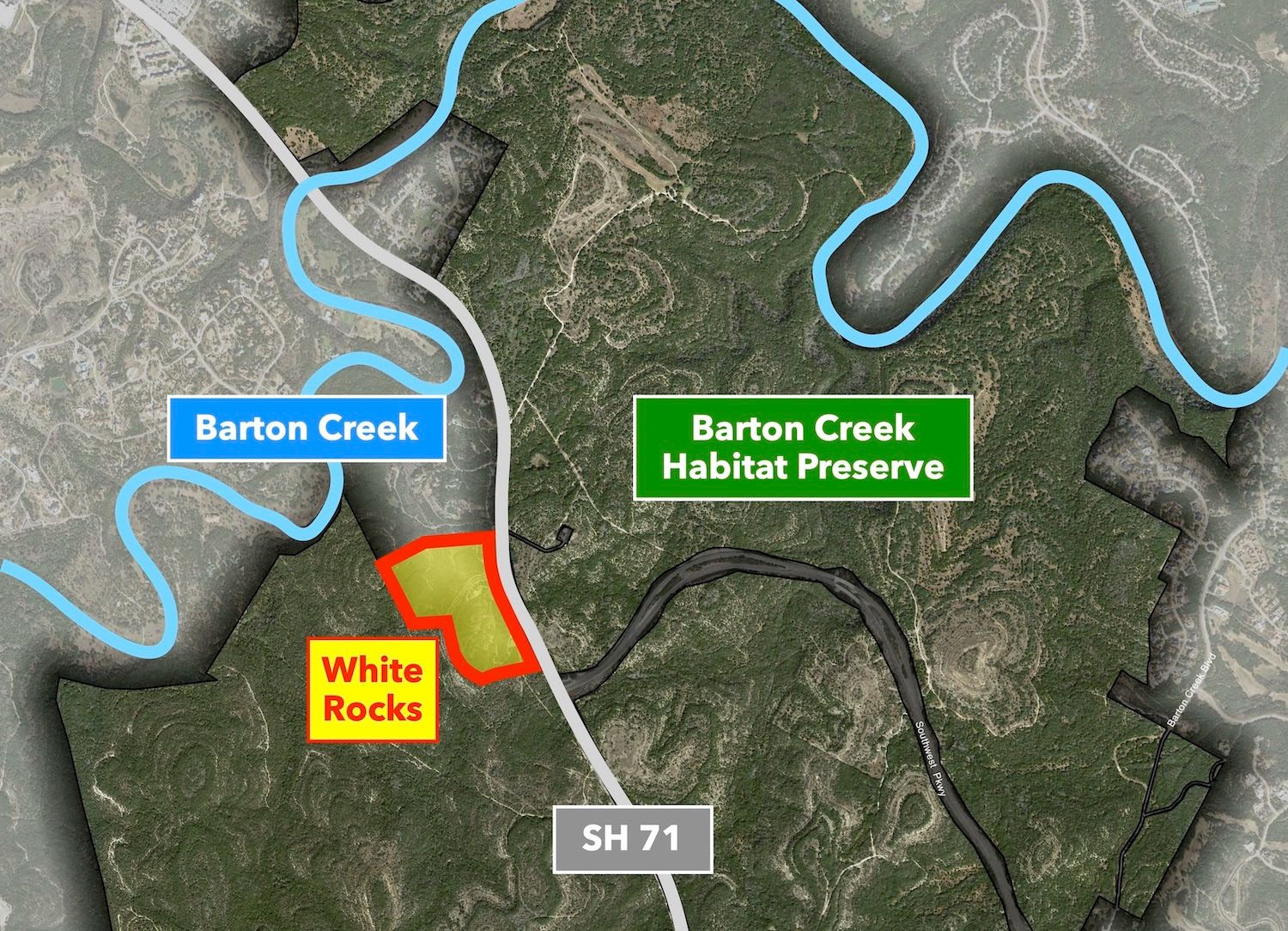
WHAT'S THE PROBLEM? The risky location for Milam’s sewage plant has been compounded by the inadequate draft wastewater permit that TCEQ’s staff has proposed for White Rocks. Among the permit's problems:
• Because the White Rocks site has rocky soil with poor absorption, additional soil will have to be brought in for the irrigation fields. However, the soil requirements in the draft permit aren’t sufficient to prevent wastewater from leaching away from the irrigation fields.
• At some TLAP facilities, treated sewage has continued to be irrigated onto fields that are already saturated. The result has been wastewater runoff that has flowed into the nearest stream. TCEQ fined Dripping Springs for a 2016 incident in which 26,000 gallons of wastewater flowed off of saturated irrigation fields and into Onion Creek.
• The problems from potential leaching or runoff would be exacerbated by the lack of any limits in the White Rocks draft permit on the amounts of nitrogen and phosphorus that could remain in wastewater after treatment.
• Predicting the likelihood of potential problems for the White Rocks permit is impossible because TCEQ doesn’t include the same monitoring and reporting requirements for irrigation permits that it does for discharge permits. As a result, the agency simply doesn’t have the necessary data to know whether TLAP permits are really as problem-free as they’re believed to be.
White Rocks is Chris Milam’s second attempt to build a huge development on this property. His 2022 proposal for the Violet Crown Amphitheater died after Austin officials rejected his request that the city extend its water and wastewater lines to the property. At the time, Austin could make decisions about Milam’s property because it was in the city’s ETJ area (Extra-Territorial Jurisdiction). But in 2023, the Texas Legislature passed SB 2038, a disastrous law that allows properties to withdraw from cities' ETJ areas. Milam quickly took advantage of the new law to escape the environmental protections that Austin requires for new developments in the Edwards Aquifer Contributing Zone.
Milam is now using White Rocks’ location within the Barton Creek Habitat Preserve and Austin’s larger Balcones Canyonlands Preserve system as a selling point for his development’s residences, which will cost as much as $3.5 million. The sales brochure for White Rocks states: “The development occupies one of the highest sites in the Austin area. It is within the city, yet protected by 10,000 acres of permanent nature preserve immediately surrounding the project. ... [T[he residences offer forever unobstructed views of the surrounding nature....”
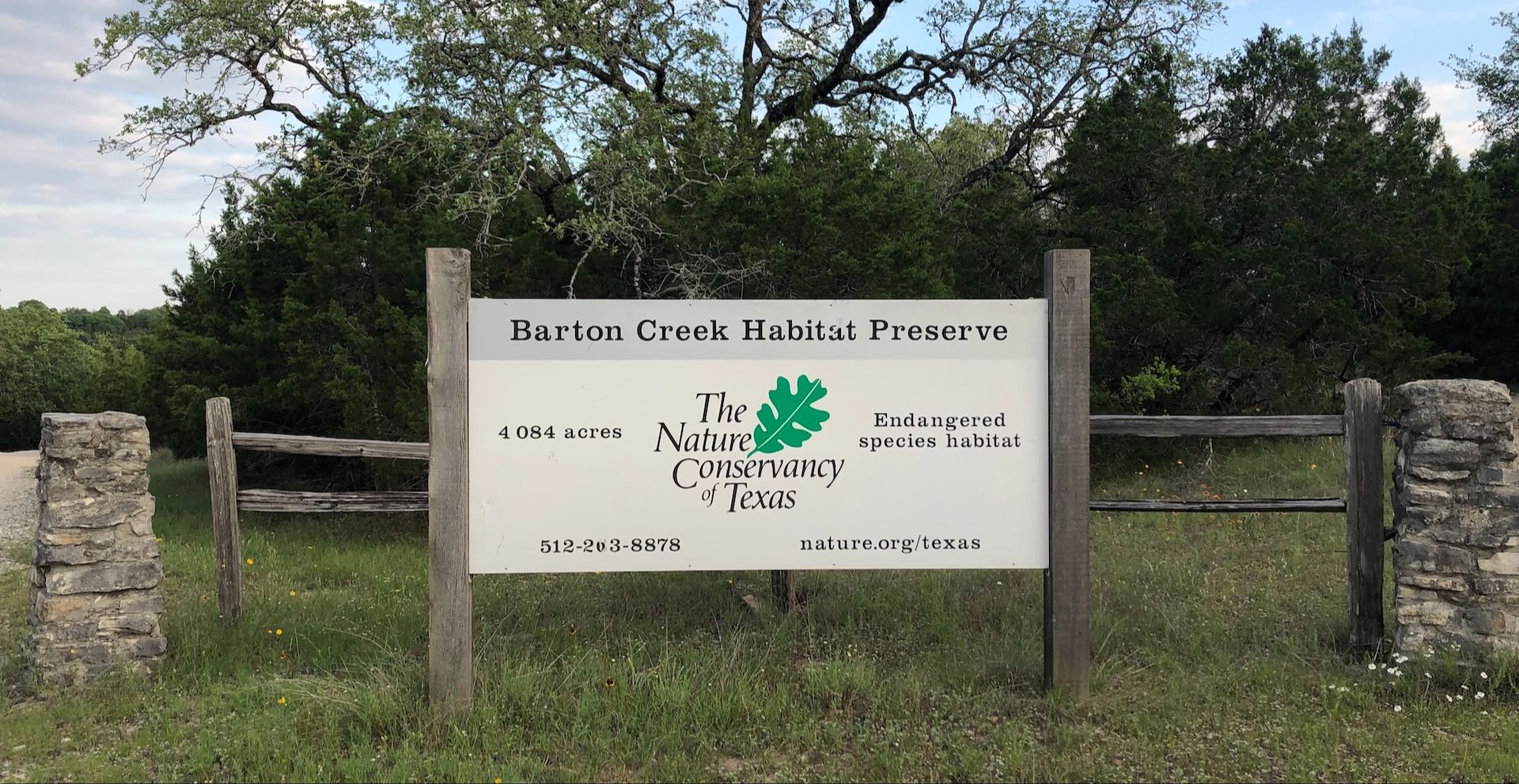
The Barton Creek Habitat Preserve, created in 1994, is owned and managed by The Nature Conservancy. Roughly 2,500 of the preserve’s 4,050 total acres provide mature oak and juniper forest habitat for the endangered golden-cheeked warbler, the only bird species to nest exclusively in Central Texas. The preserve additionally shelters the black-capped vireo and other grassland bird species. While the black-capped vireo is no longer listed as an endangered species, sightings in our area are rare— predominantly due to lack of habitat. The preserve also maintains the pristine quality of the water in Barton Creek by preventing water pollution from development within its property.
Fitzhugh Concert Venue
WHAT'S THE LATEST? Local landowners, including Shield Ranch, are in the early stages of a contested case hearing on TCEQ's draft wastewater irrigation permit for the Fitzhugh Concert Venue.
WHAT'S HAPPENING? California developer Bill Hirschman, operating as Blizexas LLC, wants to build a 5,000-seat amphitheater and 1,823-vehicle parking lot at the intersection of Fitzhugh and Crumley Ranch Roads, northeast of Dripping Springs. He's submitted a permit application to TCEQ for a wastewater irrigation facility that would be located just a few thousand feet uphill from Barton Creek and over the Edwards Aquifer Contributing Zone.
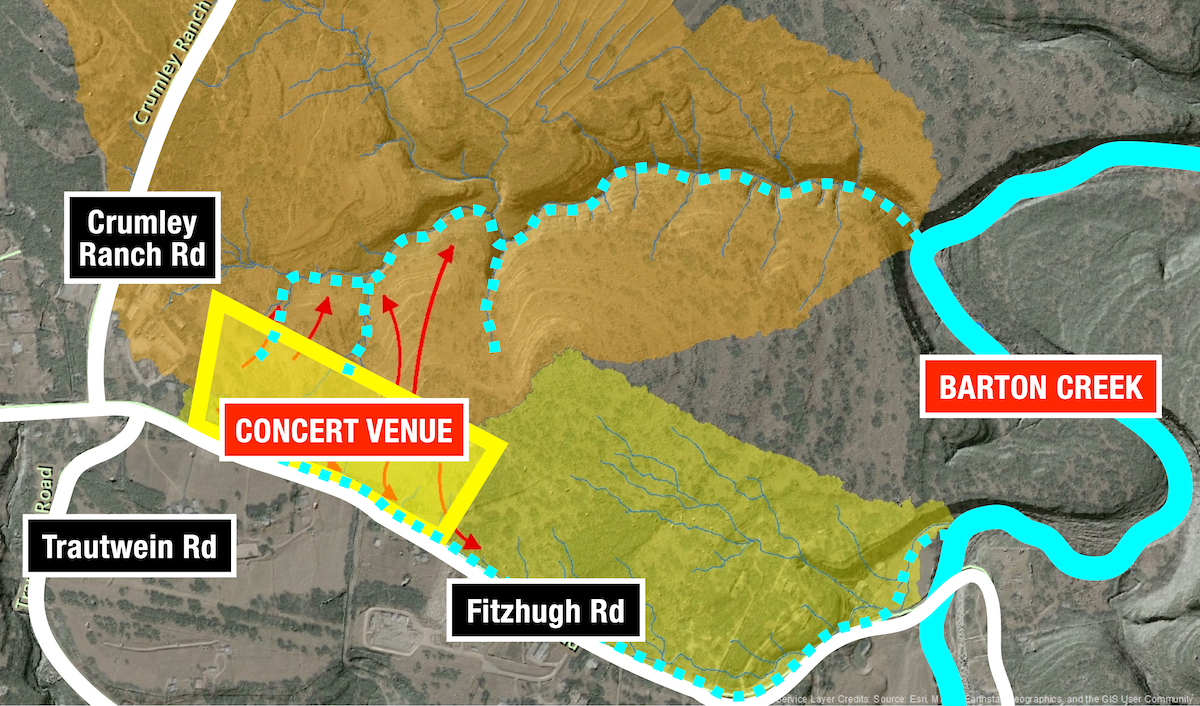
WHAT'S THE PROBLEM? Hirschman will be able to build his concert venue with 66% impervious cover because the site is located just outside the ETJ areas of Austin and Dripping Springs. New developments in both cities’ ETJs must comply with much lower impervious cover maximums if they're located in the Edwards Aquifer Contributing Zone — 20% for Austin and 35% for Dripping Springs. The single largest feature of the Fitzhugh Concert Venue will be a 1,823-vehicle parking lot that will occupy 52% of the property. For comparison, the venue’s parking lot will be four-fifths the size of the 2,261-vehicle underground parking garage for the Capitol Mall in downtown Austin. When rain falls on impervious surfaces, it produces runoff pollution. Large parking lots, such as the one that Hirschman is proposing, produce more pollution.
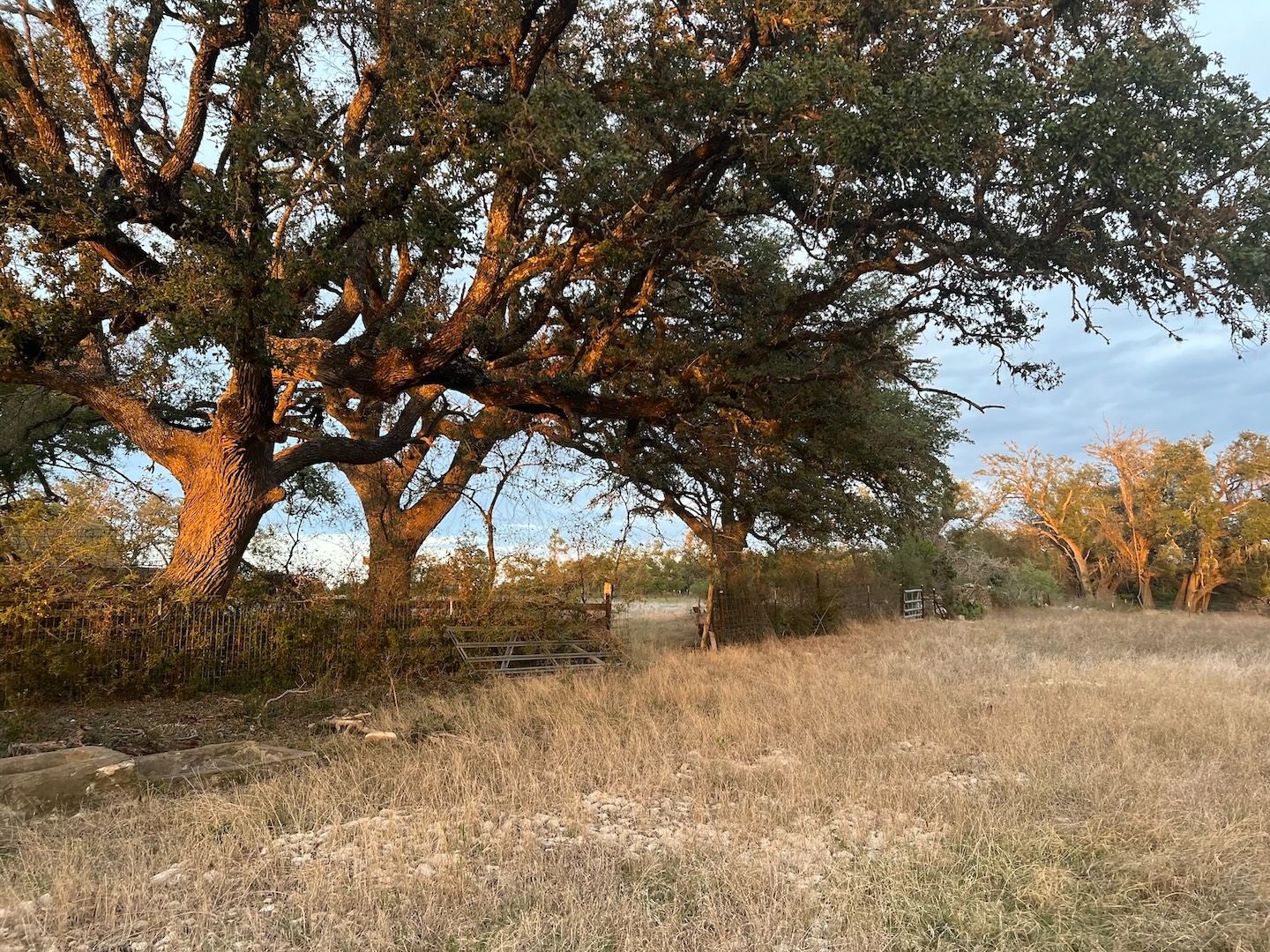
This would be the entrance to Bill Hirschman’s parking lot for 1,823 vehicles.
More than a hundred people showed up for a TCEQ public meeting on the Blizexas wastewater permit application in 2023. Because of procedural mistakes with the initial application, TCEQ and Blizexas were forced to restart the application process and hold a second public meeting in 2024, which drew more than 300 people. We know that the music business is vital for the local economy. Other outdoor amphitheaters have been built in the Austin area, but in more sensible places. Bill Hirschman’s location — next to Barton Creek and over the Edwards Aquifer Contributing Zone — is the wrong place to build an amphitheater with a giant parking lot.