
Header Logo
About
Home Vision Calendar of Events History Staff & Board Contact
Our Work
Advocacy Overview Salado Creek Pristine Streams Barton Creek Hays County Hill Country
Resources
All Newsletters Latest Issue Pristine to Polluted Report Explorer's Guide
Support Us
Donate Sponsor Join Our Team Volunteer Monthly Talks Guided Walks
← Back to all posts

Central Texas's Seasonal Songbirds

by Logan Ferguson
Feb 03, 2026
Connect

When winter settles over Central Texas and the live oaks trade cicada buzz for quiet mornings, the region’s birdlife subtly shifts. The colder months bring a fresh cast of avian travelers—small, hardy songbirds escaping harsher northern climates in search of food and refuge. These seasonal visitors often arrive quietly, but their presence brings life to the winter landscape. They remind us that even in the stillness of winter, Central Texas remains very much alive.


The Cedar Waxwing

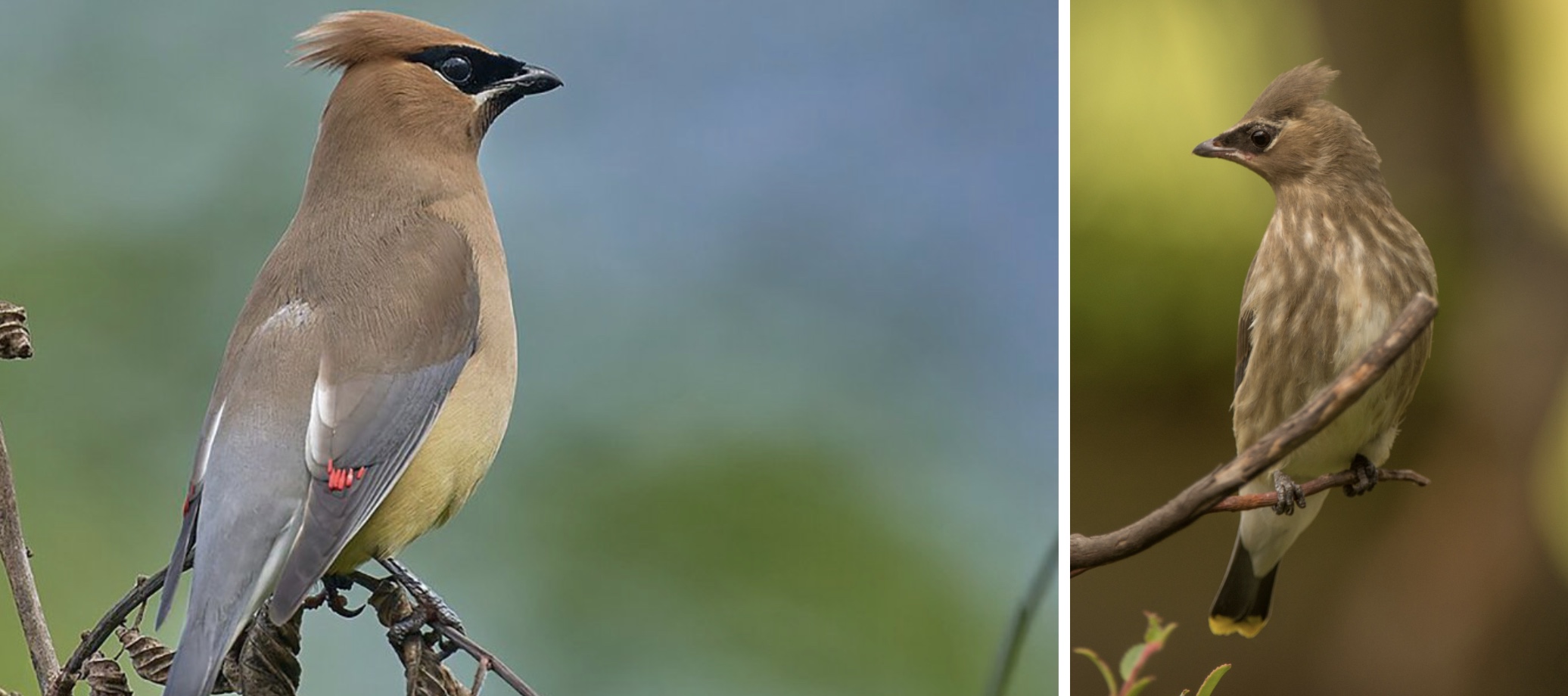
The cedar waxwing typically measures 5.5 to 6.7 inches long with a wingspan of around 12 inches. In winter, they may puff out their body feathers, causing them to appear more rotund than they truly are. These birds are referred to as “waxwings,” due to the red, waxy wingtips on adult birds. The juveniles lack these waxy wingtips and display different patterning from adults with more dull, greyish-brown plumage and streaky chest feathers. Fruit is the cedar waxwing’s favorite snack, constituting the entirety of their winter diets. In fact, their scientific name, “Bombycilla cedrorum,” translates to “silk tail of the cedars” and can be attributed to their high consumption of cedar berries in the winter. Cedar waxwings are remarkable seed dispersers, able to swallow fruit seeds whole and distribute them far throughout the surrounding area. In the warmer months, they acquire protein from insects, such as mayflies, dragonflies, stoneflies, ants, spruce budworms, and beetles. Catkins and flowers also contribute to their protein intake. They are highly social and not territorial, usually found in flocks and generally content nesting in close proximity to other waxwings. Cedar waxwings are very vocal birds, especially while in flight, often heard vocalizing their 2 most common calls, a sighing whistle and a high-pitched trill.
 Listen to the cedar waxwing


Adult cedar waxwing on the left  (photo: Blue Ridge Country) versus juvenile cedar waxwing on the right (photo: Wings over Skagit).


Cedar waxwings do not follow the predictable north–south migration patterns seen in many songbirds. Instead, they are best described as nomadic, wandering widely in response to the availability of fruiting vegetation. Northern populations generally move south during winter, reaching the southern United States, including Central Texas, and as far south as Panama. Their exact wintering locations can vary dramatically from year to year with large flocks suddenly appearing in an area rich with berries and just as quickly vanishing once food supplies are depleted. This flexible movement strategy allows cedar waxwings to take advantage of ephemeral food sources and explains their sometimes irruptive presence during winter in Central Texas. These birds are most prevalent in orchards, residential areas, and along forest edges where fruiting vegetation is more abundant.

 

The White-throated Sparrow

The white-throated sparrow measures roughly 6.7 inches long with a wingspan of 7.9 to 9.1 inches. White-throated sparrows have 2 color morphs — one with tan, black, and yellow head stripes and the other with black, white, and yellow head stripes. Interestingly, birds with white stripes tend to be more aggressive than those with tan stripes. ​​Females display more muted coloration than males, whether they have tan or black head stripes. The yellow pigmentation in their head feathers is produced from the carotenoids in the fruits and seeds they consume. (Fall and winter forages, such as grapes, cranberries, and blueberries are especially high in carotenoids.) Juvenile plumage is brown and streaky throughout. The white-throated sparrow’s diet consists of 80% vegetation and 20% animal protein. They feed primarily on weeds, seeds, and grasses in the wintertime. They forage on tree buds and flowers, such as oak, apple, maple, and beech in spring and consume the most insects and arthropods in summer.


White-throated sparrow with tan head stripes on the left (photo: Mass Audubon) versus white-throated sparrow with white head stripes on the right (photo: Southern Wisconsin Bird Alliance).


Male white-throated sparrows sing throughout the mornings with the goal of attracting a mate. The white-throated sparrow’s iconic whistle consists of 2 longer notes followed by 3 short, repeating notes. In recent years, however, white-throated sparrows in western Canada have started singing a new version of their call ending with 2 short, repeating notes instead of the original 3. In the span of 2 decades, this new call has spread from the western part of their range to British Columbia and Ontario. The older version ending in 3 short notes can now only be heard in the eastern part of the white-throated sparrow’s range. Their melody is enjoyed by American and Canadian birders, alike, as it is vocalized in all 4 seasons throughout the bird’s breeding and nonbreeding range. White-throated sparrows may also make the “pink” call to signal a nearby predatory threat. Their “seat” call is used to keep in contact with other birds while foraging for food or to locate a mate.

Listen to the white-throated sparrow 

White-throated sparrows are short- to medium-distance migrants with a well-defined seasonal pattern. Most of the population moves south in fall from the Canadian boreal forests to overwinter in the eastern and southern United States, including Central Texas, before returning north in spring to breed. Rather than traveling in large, conspicuous flocks, they migrate more quietly and are often detected by their calls as they move through wooded edges and brushy habitats. During winter, individuals establish loose home ranges rather than true territories, allowing them to remain flexible in response to food availability and weather conditions. Their reliable annual movements make the white-throated sparrow one of the most consistent and familiar winter sparrows across its nonbreeding range.


The Dark-eyed Junco

The dark-eyed junco is one of the most widespread birds in North America with as many as 15 subspecies. They typically measure 5.5 to 6.3 inches long with a wingspan of around 9.25 inches. The females have slightly lighter grey plumage than males. Seeds make up 75% of the dark-eyed junco’s diet. These birds also enjoy foraging on chickweed, buckwheat, lamb’s quarter, sorrel, beetles, moths, ants, and caterpillars.


Female dark-eyed junco on the left (Photo: Sacramento Audubon Society) versus male dark-eyed junco on the right (Chicago Ornithological Society).


Dark-eyed juncos make a high-pitched trilling call while in flight. They also vocalize a fast “cue cue cue” when in confrontation with other birds. This call has been compared to the sound of lasers blasting in Star Wars. The males sing a musical trill consisting of anywhere from 7 to 23 notes and lasting only 2 seconds!

Listen to the dark-eyed junco 

Dark-eyed juncos are partial migrants, with movement patterns that vary depending on population, sex, and latitude. While many individuals remain on or near their breeding grounds year-round, large numbers migrate south in fall from the boreal forests of Canada and Alaska to winter across much of the United States, including Central Texas. Dark-eyed junco winter flocks have a social hierarchy with the males dominant over the females and adults over the younger birds. Females tend to have less access to food and may struggle to survive in flocks composed of mainly male birds. Male dark-eyed juncos generally overwinter farther north than females, a pattern known as differential migration, which allows males to return earlier in spring to claim high-quality breeding territories. Male juncos arrive with the first cold fronts and remain active through winter conditions that send many other songbirds farther south, earning the species the nickname “snow birds."


Whether fruit-loving waxwings, soft-whistling sparrows, or hardy juncos, each species plays a role in our region’s winter ecology. Their seasonal journeys highlight the resilience of birds and offer a reminder that winter is an equally vibrant chapter in the natural world. 

If you enjoyed reading this article, consider supporting our nonprofit with a donation. Your generosity helps us continue sharing educational content like this—connecting people to Central Texas's living landscapes—while supporting education, conservation, and outreach efforts that protect these species and their habitats. Every contribution, big or small, helps keep this work flying forward.

Donate to Save Texas Streams! 

Eager to learn more about Texas’s avian life? Consider taking your bird knowledge a step further with the Bird Language course offered at NaturalistStudies.com. This online course teaches you how to read birds beyond identification—how to understand their calls, body language, and alarm behaviors so you can interpret what’s happening all around you in nature. Whether you’re a beginner or an avid birdwatcher, this course will deepen your connection to birds and help you understand the natural world with a new level of awareness.

Take Naturalist Studies' bird language course 


Responses

Join the conversation
t("newsletters.loading")
Loading...
Stories Written in Snow: Safeguarding Wildlife Habitat Along Our Waterways
Stream protection is about more than the water flowing downstream — it’s about the entire watershed. Healthy streams depend on the surrounding riparian area: the vegetated land along creek banks, the sedges and bulrushes that hold soil in place, the gallery forests, slopes, and grasslands that absorb rainfall and slowly release it into the channel. These landscapes keep water flowing and water...
Interpreting the Weather
How can you tell when extreme weather is imminent, and what can you do to ensure you are prepared? In this podcast, Save Texas Streams Executive Director Lee Burton and veteran meteorologist Troy Kimmel break down how major weather systems form—and the warning signs that often appear before they turn deadly. From the 2025 Central Texas floods to prolonged heat waves and our recent powerful wint...
Tell TCEQ: Don’t flood Salado Creek
with treated sewage!
STS NEWS 01.25.26 The Texas Commission on Environmental Quality (TCEQ) has been processing permit applications for 12 new wastewater facilities that could discharge up to 8 million gallons of inadequately treated sewage every day into Salado Creek. This is one of the largest concentrations of new wastewater permit applications anywhere in Texas. Salado Creek is a pristine stream that runs over...

Save Texas Streams Newsletter

Receive updates on key policy issues, environmental education on Central Texas ecology and natural history, and opportunities to get involved in protecting our streams and aquifers.
Footer Logo
© 2026 Save Texas Streams, a 501c3 organization
Powered by Kajabi

Join Our Free Trial

Get started today before this once in a lifetime opportunity expires.