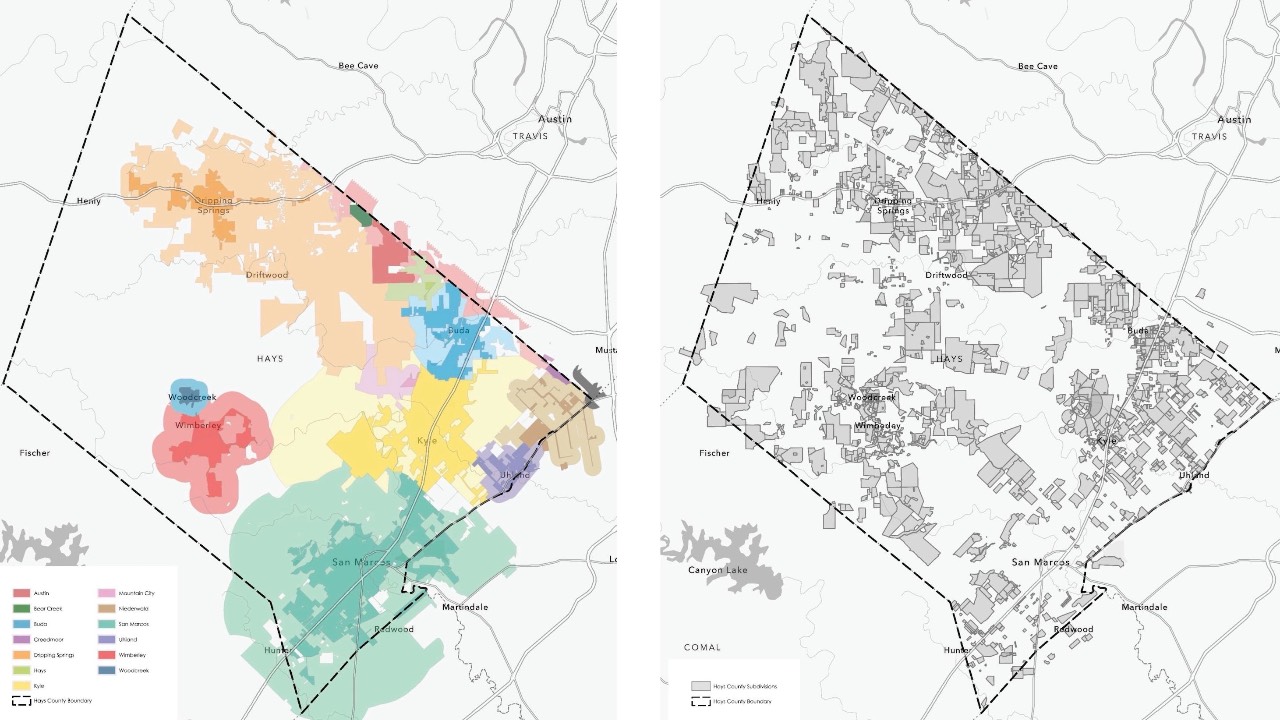
Two pending wastewater permits pose problems for local pristine streams, but you'll have an opportunity to comment on them when the Texas Commission on Environmental Quality (TCEQ) holds public meetings on each permit. The worst one would allow the proposed Madelynn Estates subdivision to discharge poorly treated sewage into Onion Creek south of Dripping Springs. The city of Blanco is also seeking renewal of its existing permit to discharge treated wastewater into the Blanco River. While the city has taken admirable steps to manage its wastewater responsibly, TCEQ’s staff has drafted a new permit for Blanco with insufficient pollutant limits that would set a weak precedent for other pristine streams.
TCEQ is holding a public meeting on the Blanco permit next week and on the Madelynn Estates permit next month. You can submit comments on both permits either online or in person. Tell TCEQ that it needs to reject the Madelynn Estates permit outright, and that it needs to improve the requirements in the Blanco permit. You can also tell the agency that both permits show why TCEQ needs to adopt the Pristine Streams rule, which would require new developments to irrigate wastewater on land rather than discharging it into rivers and creeks like these. (Keep reading below for more information on both permits)
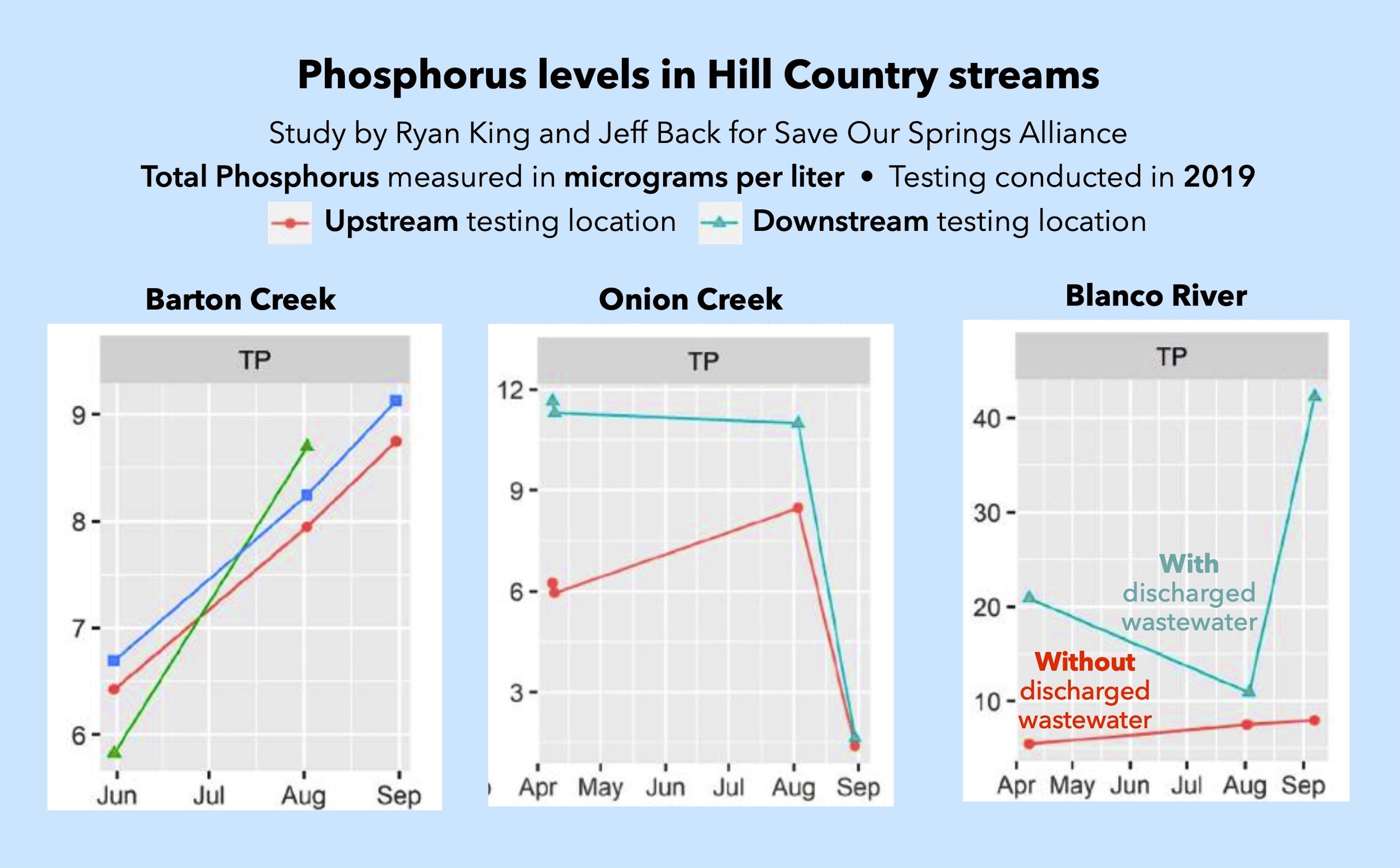
In order to explain why the Madelynn Estates permit is so bad, it’s necessary to explain what makes Onion Creek so special. Dr. Ryan King and Jeff Back at Baylor University conducted extensive water quality testing in 2019 on several Hill Country streams for a study commissioned by Save Our Springs Alliance. Their measurements for phosphorus levels are especially key, since pristine streams have extremely low levels of naturally occurring phosphorus, and adding any additional amount can fertilize the growth of excessive algae. The testing by King and Back confirmed that Barton and Onion Creeks have extremely low levels of phosphorus, ranging from 1 to 12 micrograms per liter. They also found the same low phosphorus levels on the Blanco River upstream from the city of Blanco’s wastewater outlet, but much higher levels at a location downstream from the city’s outlet.
TCEQ has already issued two permits that allow the discharge of domestic wastewater in the Onion Creek watershed, which lies just south of the Barton Creek watershed. The agency approved a discharge permit for the Belterra subdivision in 2008 with what officials claimed were the strictest limits in the state. TCEQ recycled those same limits in the discharge permit that it issued in 2023 to the city of Dripping Springs: