
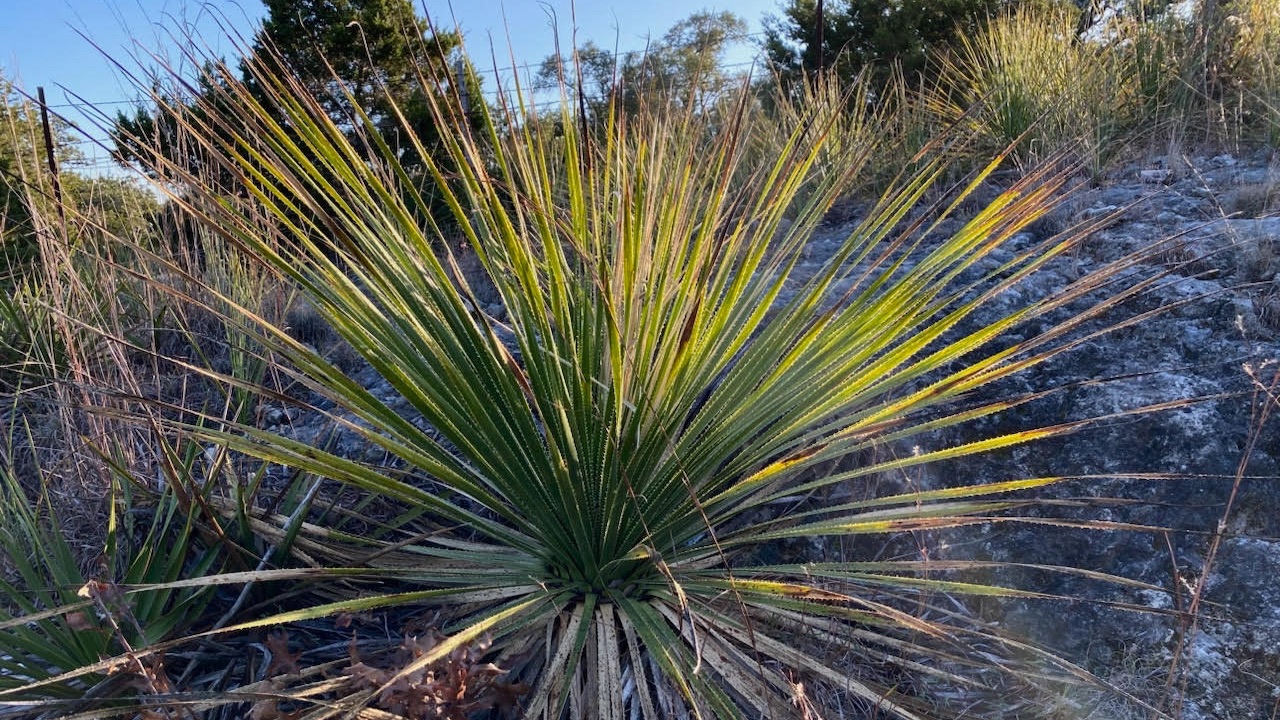
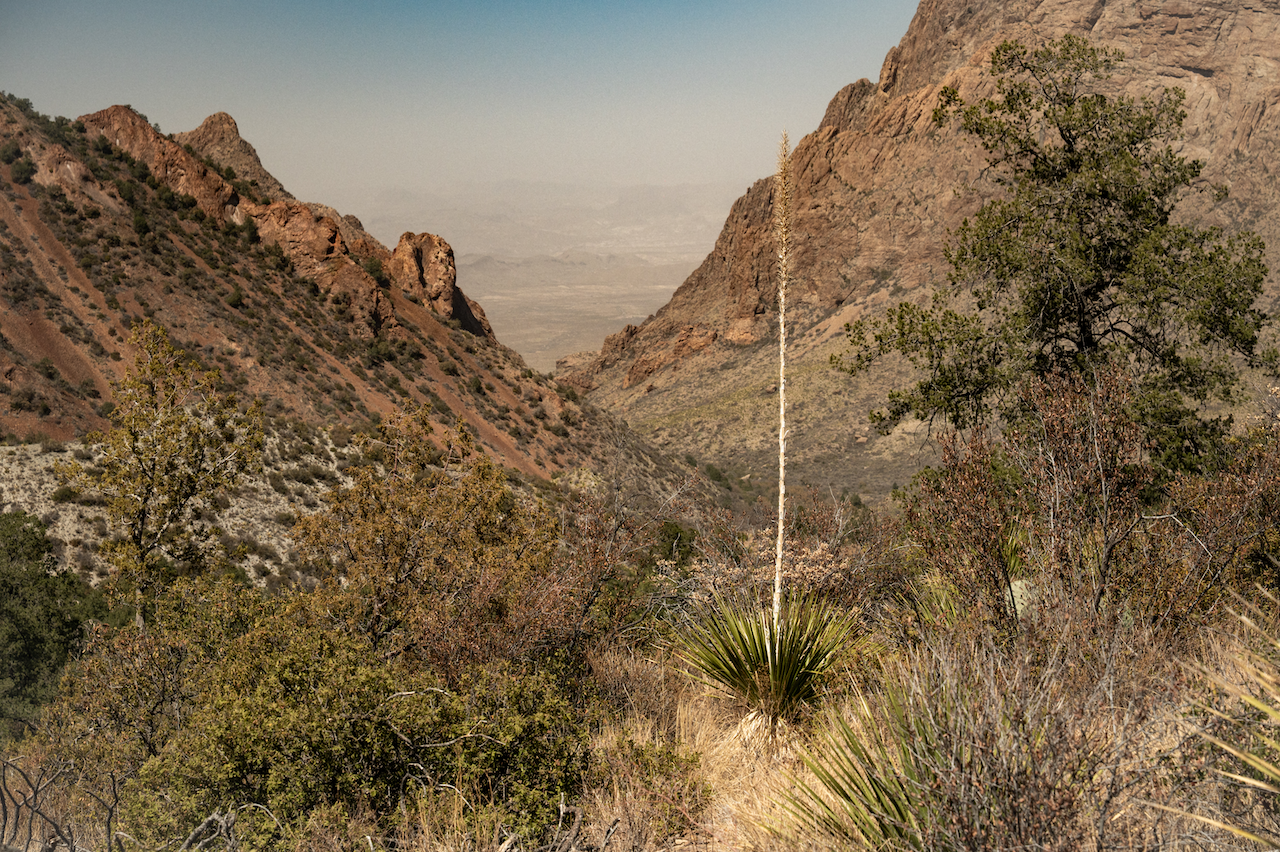
Native to the arid stretches of the southwestern United States and northern Mexico, the sotol plant displays its rosette of long, linear leaf blades, growing out in all directions from a ground-level, central bulb. When the leaves die, they remain attached to the bulb, forming a skirt of dry, grey-to-brown leaves around the base. This desert perennial’s most distinctive feature is its tall, flowering stalk, also referred to as the mast, or quiote, in Mexico. Sotol stalks extend upwards from the center of the rosette, reaching up to 15 feet in height! Thousands of faint yellow flowers bloom in a narrow cluster at the tip of the stalk in May through July. Sotol plants don’t flower until they are seven-to-ten years old and, even so, individual plants aren’t guaranteed to bloom each year. Although pollinated by wasps, bees, and hummingbirds, sotol relies primarily on wind for the cross pollination of male and female plants.
These drought-tolerant succulents grow well in rocky, well-drained slopes throughout west Texas. Its native range includes 20 states in northern Mexico and extends north into Texas, Arizona, and New Mexico. The genus, Dasylirion, comprises 23 species, all commonly referred to as sotol, with the species Dasylirion texanum being native to the Austin area. While commonly mistaken for a cactus, yucca, and agave, Dasylirion is distinct from all three. In fact, sotol was originally misclassified as an agave in 1934 until 60 years later when DNA testing by Ph.D. student, David Bogler, proved otherwise. Interestingly, Bogler’s data revealed the sotol plant belongs to the Nolinoideae subfamily of the Asparagaceae family, making it more closely related to asparagus than agave, cactus, or yucca. Sotol is structurally hardier than agave and takes more time to mature.
All photos by Desert Door Distillery
The juices extracted from their roasted hearts can be distilled into an alcoholic spirit, also referred to as sotol. Archaeologists have found fermented sotol dates back over 1,000 years, making it the earliest known fermented plant in North America. Native Americans used sotol in their religious ceremonies, drinking the fermented beverage before eating the baked hearts. Despite being outlawed in Mexico in 1944, sotol remained the most popular distilled spirit in the northern Mexican states of Chihuahua, Coahuila, and Durango. It was not until 1994 that Mexico recognized sotol’s economic potential and lifted the ban, making it legal to produce and sell sotol commercially, once again. Sotol was also commonly consumed among the frontier population of west Texas before being outlawed in the United States during the Prohibition.
Desert Door Distillery in Driftwood Texas was the first commercial sotol distillery to open in the United States since the Repeal of the Prohibition in 1933. Since its founding in 2017, this local establishment has stood out as a shining star of sustainable land management. CEO and Founder, Brent Looby, explained how they harvest sotol directly from the wild and “work with the landscape as it exists,” effectively eliminating the need for pesticides, fertilizers, plowing, or water. Looby described how Desert Door harvests sotol by hand, using a rotational method that allows the land time to recover naturally between cuts and intentionally leave the root system intact, helping retain nutrients in the soil. After harvesting the sotol, the hearts are extracted, steamed, and pressed to release their raw sugars. Water and yeast are added to the mixture ferment the sotol and, finally, this liquid is run through a column still, resulting in what Brent describes as a “true ranch-to-glass spirit that tastes unquestionably like the land.”
Archaeological evidence and historical narrative accounts suggest sotol was a critical source of carbohydrates and the primary food staple for many native tribes of the Lower Pecos Canyonlands and southern and eastern Edwards Plateau. Sotol seeds have been identified in preserved human feces from caves in the Lower Pecos archaeological region and sotol roasting sites were discovered in West Texas’s Sabinal Canyon. According to The Life of F. M. Buckelew: The Indian Captive, As Related by Himself (1925), the Indigenous Peoples of present-day Utopia on the Sabinal River baked sotol in earth-sealed kilns. The sotol hearts were extracted from the central bulbs, baked in airtight earth ovens, and then pounded into thin patties. During dry spells, sotol’s short trunks split open to expose their spongy hearts, providing food to wildlife. The flower stalks can also be roasted, boiled, or eaten raw. The flavor of sotol is deeply influenced by the environment in which it grows; plants from forested areas tend to have piney notes with hints of eucalyptus and mint, while those from desert landscapes offer a more earthy, grounded taste.
In addition to serving as a critical food source for the native desert tribes of northern Mexico and the American southwest, sotol has offered a variety of other practical applications. The tough fibers of sotol leaves were twisted into twine and used to weave baskets, mats, and even durable sandals. More recent applications of the sotol leaves include the making of roof thatching and hats. The Lipan, Chiricahua, and Mescalero Apache configured the plant’s tall stalks into knife handles, digging sticks, teepee poles, and spear shafts. Arguably, sotol’s most valuable characteristic was its flammability in an area where both trees and firewood are scarce. The flower stalks are well-suited for starting friction fires via the traditional bow drill method due to their fibrous and lightweight composition. Dead sotol leaves make for an ideal fuel source, as they burn fast and bright, while the fresh, green leaves can be added to the flames to provide thick smoke for emergency signaling.
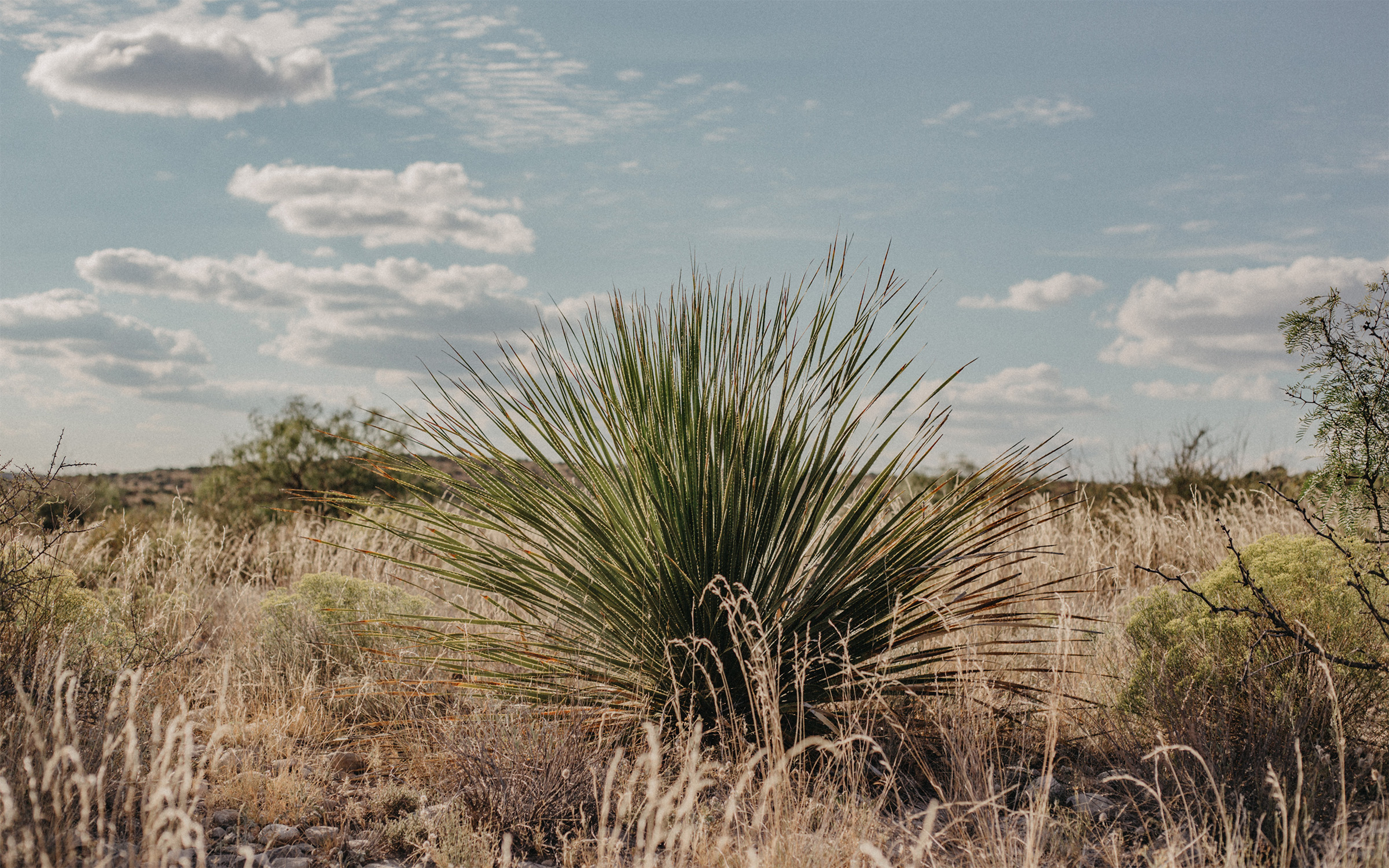
For those inspired by the sotol’s rugged beauty and resilience, it may be the perfect addition to your garden! Its striking form, drought tolerance, and low maintenance needs make it an ideal choice for native xeriscaping in Central Texas. You can find sotol plants for purchase at Barton Springs Nursery. If you’d rather simply admire the sotol plant, consider visiting the Lady Bird Johnson Wildflower Center, where they are showcased as a shining example of how native plants can create stunning, water-wise gardens that support our local ecosystems.



Responses