
The 2025 session of the Texas Legislature is over — except that it’s not. Though the regular session ended on June 2, Governor Greg Abbott ordered lawmakers to return to the Capitol for a 30-day special session starting on July 21. He’s instructed legislators to fix several bills that he vetoed, including one water bill. The governor can still add more items to the special session’s agenda, and he’s already asked lawmakers to address the horrific flooding in the Hill Country last week. This year’s session was a decent one overall for water legislation, as our advocacy director, Brian Zabcik, explained in an SBCA webinar last month (watch the recording on YouTube here). Highlights of the 2025 session:
Texas voters will be asked to approve Proposition 4 when they go to the polls this November. The proposition would amend the state’s Constitution to set aside $1 billion from state sales and use tax revenue per year, for the next 20 years, for the Texas Water Fund, which in turn will be used to pay for water infrastructure projects. The constitutional amendment was authorized by House Joint Resolution 7. If voters approve the amendment, Senate Bill 7 will then determine how the money in the fund will be spent. The Texas Water Development Board (TWDB) will be able to use 50% of the funding for “new water supply” projects, which could include facilities for desalination, treatment of oil & gas wastewater, aquifer storage & recovery (ASR), and water reuse. SBCA and our partners in the Wastewater Conservation Coalition strongly support water reuse, and we were glad to see it added to the list of eligible projects. For more details on Proposition 4, see this post by Environment Texas.
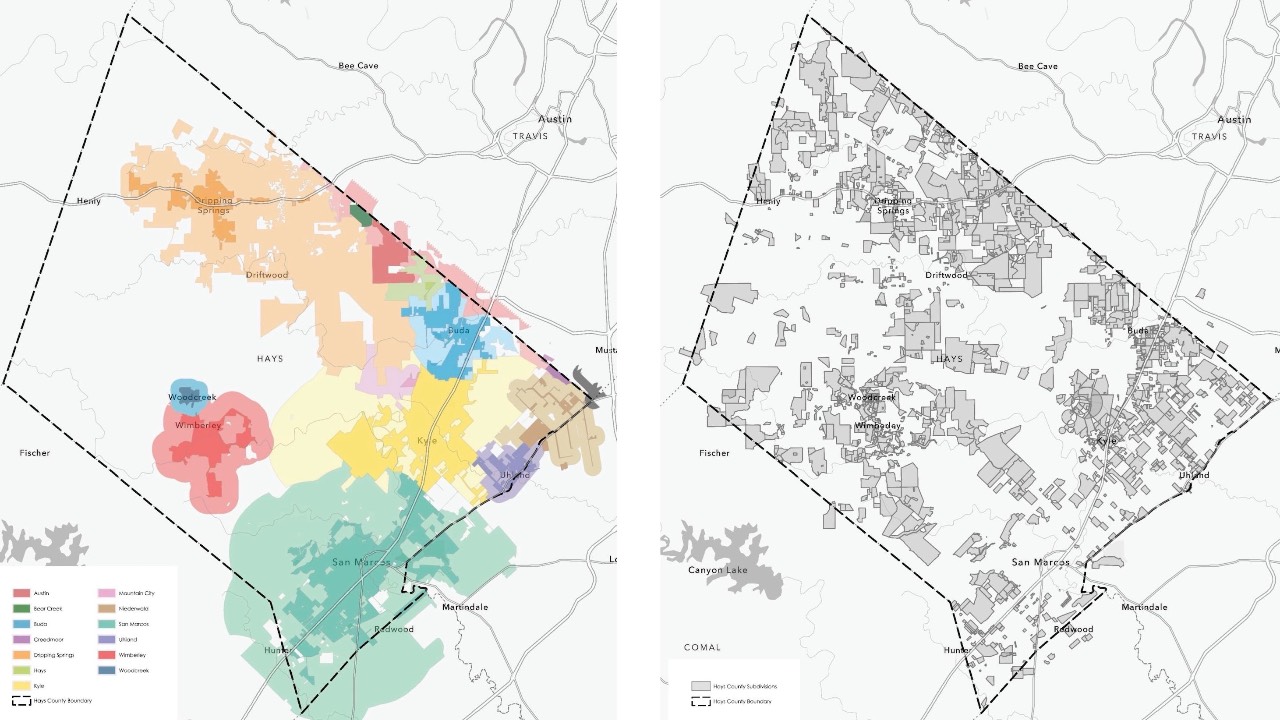
Governor Abbott vetoed Senate Bill 1253, which was a huge loss for the residents of western Hays County. That’s because the bill would have given the Hays Trinity Groundwater Conservation District (GCD) the same powers as every other district in the state to set appropriate fees and rules for the holders of its well permits. Hays Trinity GCD wasn’t given these powers when it was originally created by the Legislature, which is why it’s been unable to fully regulate overpumping at a well owned by Aqua Texas in Woodcreek. The overpumping is one of the reasons why the Jacobs Well spring has gone dry in recent years. Aqua Texas is a unit of Pennsylvania-based Essential Utilities, which has a market capitalization of $10 billion — much, much larger than Hays Trinity GCD’s annual budget.
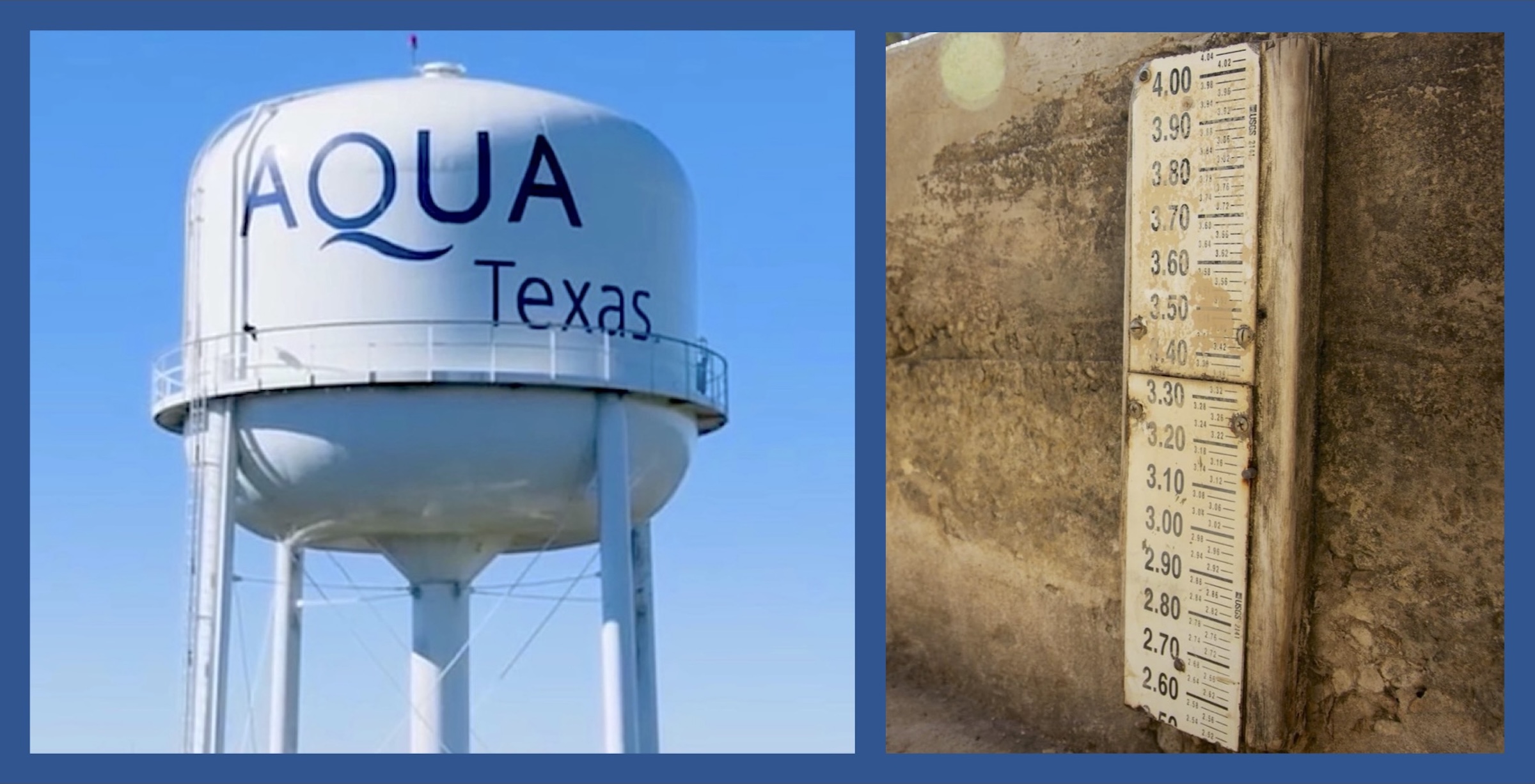
Left: Aqua Texas’s water tower in Woodcreek. Right: The water gauge at Jacobs Well.