Wings Over the Hill Country: Celebrating the Golden-Cheeked Warbler on World Migratory Bird Day
Each spring, a remarkable songbird makes an extraordinary journey from the highland forests of Central America to the oak-juniper woodlands of the Texas Hill Country. The Golden-cheeked Warbler, with its striking yellow face and sharp black crown, is the only bird species that nests exclusively in Texas. This makes it not just a migratory marvel, but an iconic symbol of the Lone Star State!
Golden-cheeked Warblers are picky about where they raise their young—and for good reason. They depend on old-growth Ashe juniper trees for nesting material, stripping the long, fibrous bark to weave compact, well-hidden nests high in the forest canopy. These nests are most often built on the horizontal branches of oak or cedar trees, where females lay three to four eggs each spring.
During their stay in Texas, these insectivorous birds stay busy. Golden-cheeked Warblers feed almost exclusively on caterpillars, beetles, and other small arthropods, gleaning them from leaves and branches with quick, darting head motions. Males are highly territorial, using their bright plumage and sharp, buzzy songs to defend their nesting sites and attract mates. You’re more likely to hear one before you see it!
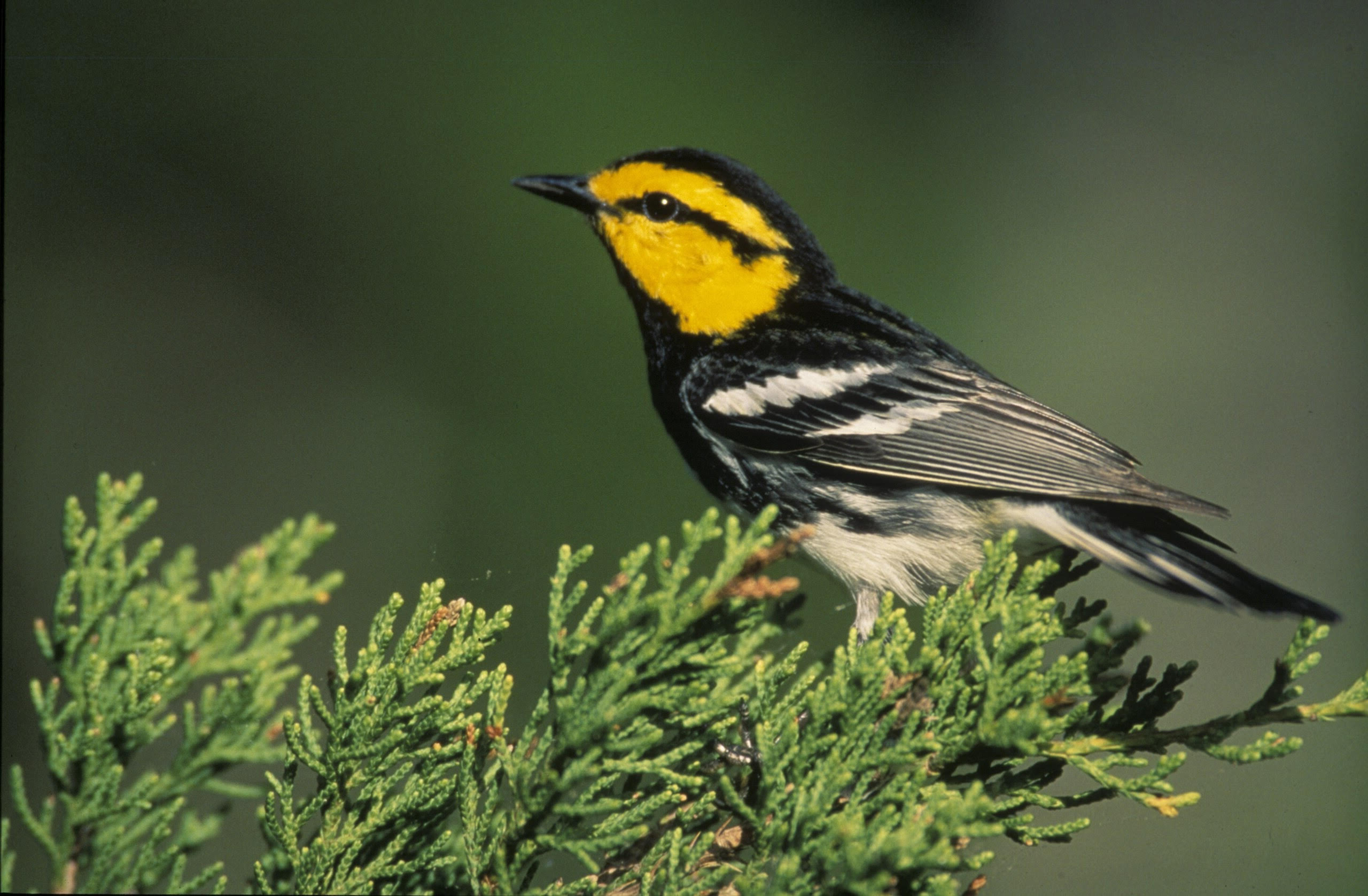

A Golden-cheeked Warlber perched at the end of an Ashe juniper branch.
The Golden-cheeked Warbler was listed as an endangered species in 1990 after its population declined due to widespread habitat loss. In response, the Balcones Canyonlands National Wildlife Refuge was established in 1992 to set aside protected breeding grounds for the Golden-cheeked Warbler and another then endangered songbird, the black-capped vivero. Since being listed as endangered, the Golden-cheeked Warbler has become a symbol of Texas conservation, reminding us that migratory birds need safe havens not only along their flyways but also in their breeding grounds.
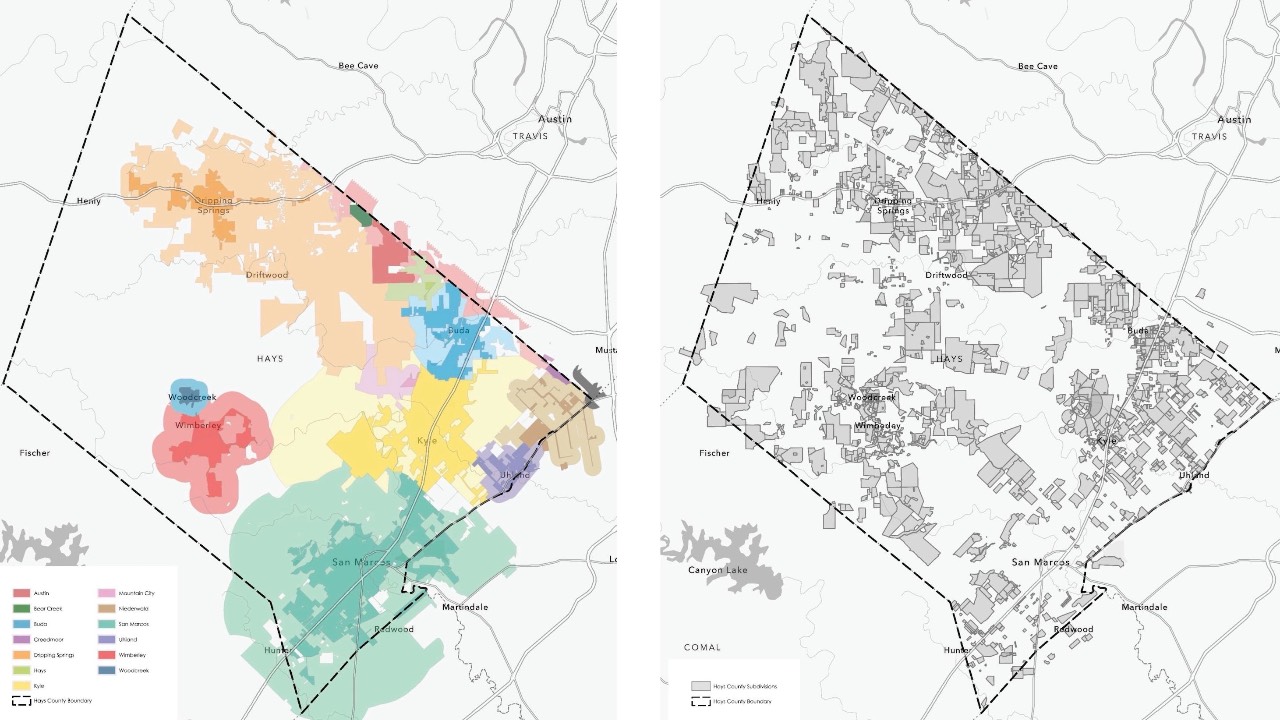
Sadly, the Golden-cheeked Warbler’s narrow breeding range is still especially vulnerable to habitat fragmentation and degradation, due to the widespread urban sprawl throughout Central Texas. The mostly undeveloped Texas Hill Country provides one of the last remaining strongholds for the mature oak-juniper woodlands that this species relies on. As sprawling development creeps into their wooded refuges, the continuity of habitat the warblers need to feed, nest, and raise their young is increasingly at risk. Recently proposed state legislations—House Bill 3798 and Senate Bill 1927—aim to strip protections for Ashe juniper trees. Conservationists warn that the clearcutting of these trees could have devastating effects on the Golden-cheeked Warbler population, potentially reversing the progress made since the bird was listed as endangered in 1990.
This World Migratory Bird Day, we celebrate the incredible resilience of birds like the Golden-cheeked Warbler and recommit ourselves to protecting the oak-juniper woodland habitat they return to each year. Let’s keep Texas a welcoming stop on their global journey.
To deepen your connection with birds like the Golden-cheeked Warbler and better understand the natural world around you, we’re excited to be partnering with Naturalist Studies to offer an online birding course designed for beginners and seasoned nature lovers alike. In this course, you’ll explore key concepts such as the governing principles that shape bird activity—from seasonal shifts to weather patterns and energy conservation. You’ll learn how to identify baseline vs. non-baseline behaviors, recognize different alarm types through calls, posture, and movement, and focus on priority bird species whose behaviors offer insights into the broader bird community. Whether you're observing from a backyard feeder or hiking a Hill Country trail, this course will help you to observe birds in a new light

Responses