TCEQ Permit Guide
Wastewater Permit Information & Submitting Comments
1) The stages the in TCEQ’s permit application process
2) Finding information on TCEQ's Pending Wastewater Permits
3) Filing Comments on a Pending Permit Application
4) Looking up permit comments in the Commissioners Integrated Database
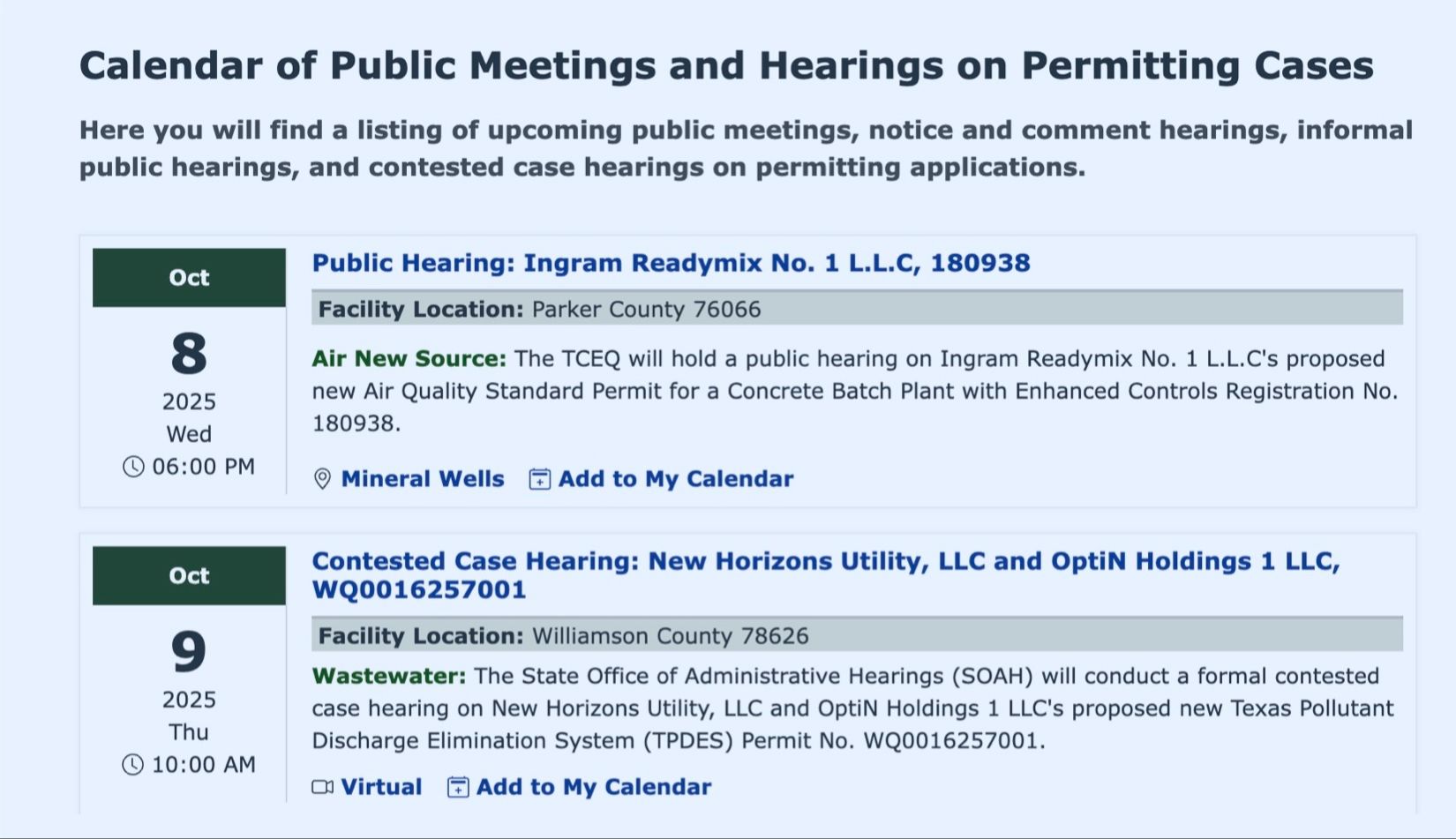
5) Tracking activities on the Calendar of Permit Meetings & Hearings
1) The stages the in TCEQ’s permit application process
All permit applications go through these initial steps:
• The applicant files a permit application.
• TCEQ issues a NORI public notice and posts the application on its website.
• TCEQ’s staff writes a draft permit.
• TCEQ issues a NAPD public notice and posts the draft permit on its website.
• TCEQ accepts comments on the draft permit during an official comment period. TCEQ may also hold an optional public meeting on the draft permit at this point.
• TCEQ staff prepares and releases a Response To Comments.
The next four steps are optional:
• Only individuals and entities who submitted comments during the comment period can request a contested case hearing.
• TCEQ’s commissioners will vote to approve or deny the hearing requests.
• An administrative law judge will conduct the contested case hearing.
• The judge’s recommendations will be issued in a Proposal For Decision.
The final stage is for all permit applications:
• TCEQ’s commissioners will vote to approve or deny the permit as is, or with the judge’s recommendations.
* See our guide to the permit process for a more detailed explanation of the above:
2) Finding information on TCEQ’s Pending Wastewater Permits
This is the really big change by TCEQ — the agency’s website now has a Pending Wastewater Permits: Information on Current Applications. Here’s what you need to know in order to use this section:
TCEQ issues two kinds of wastewater permits — TPDES discharge permits and TLAP irrigation permits. TPDES stands for Texas Pollutant Discharge Elimination System and TLAP stands for Texas Land Application Permit. TPDES permits allow treated wastewater to be discharged into water — either a stream, lake, or bay. TLAP permits allow treated wastewater to be irrigated onto land — either land set aside solely for that purpose, or for landscaping that already requires watering.
When you go to the Pending Permits landing page, click first on Permit Types and then click on either TPDES permits or TLAP permits, since they’re listed separately. These listings included pending permits for the entire state — 925 TPDES discharge permits and 118 TLAP irrigation permits were listed as of 10.07.25.
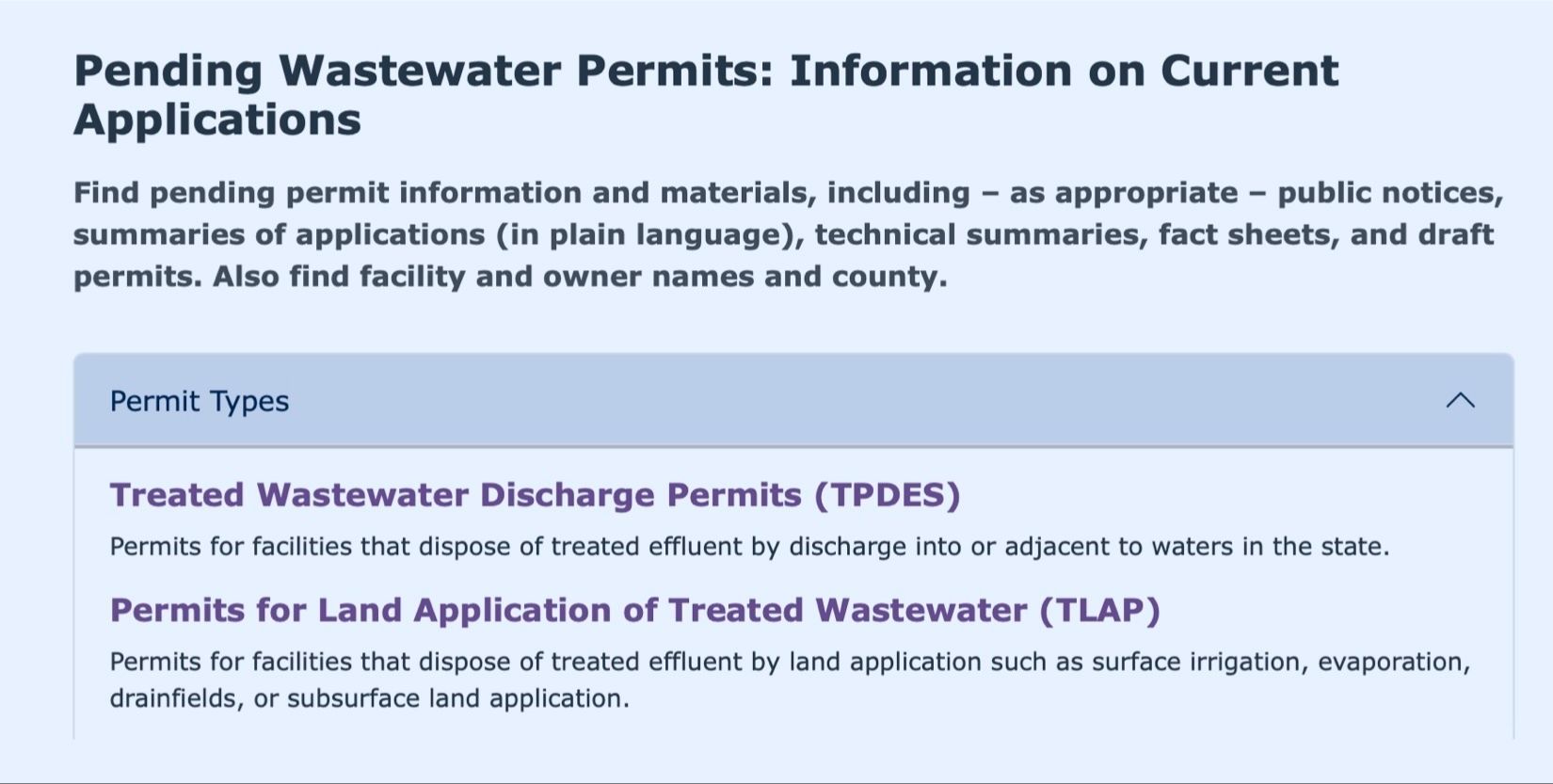
Whether you click on TPDES permits or TLAP permits, the results page will look like this:
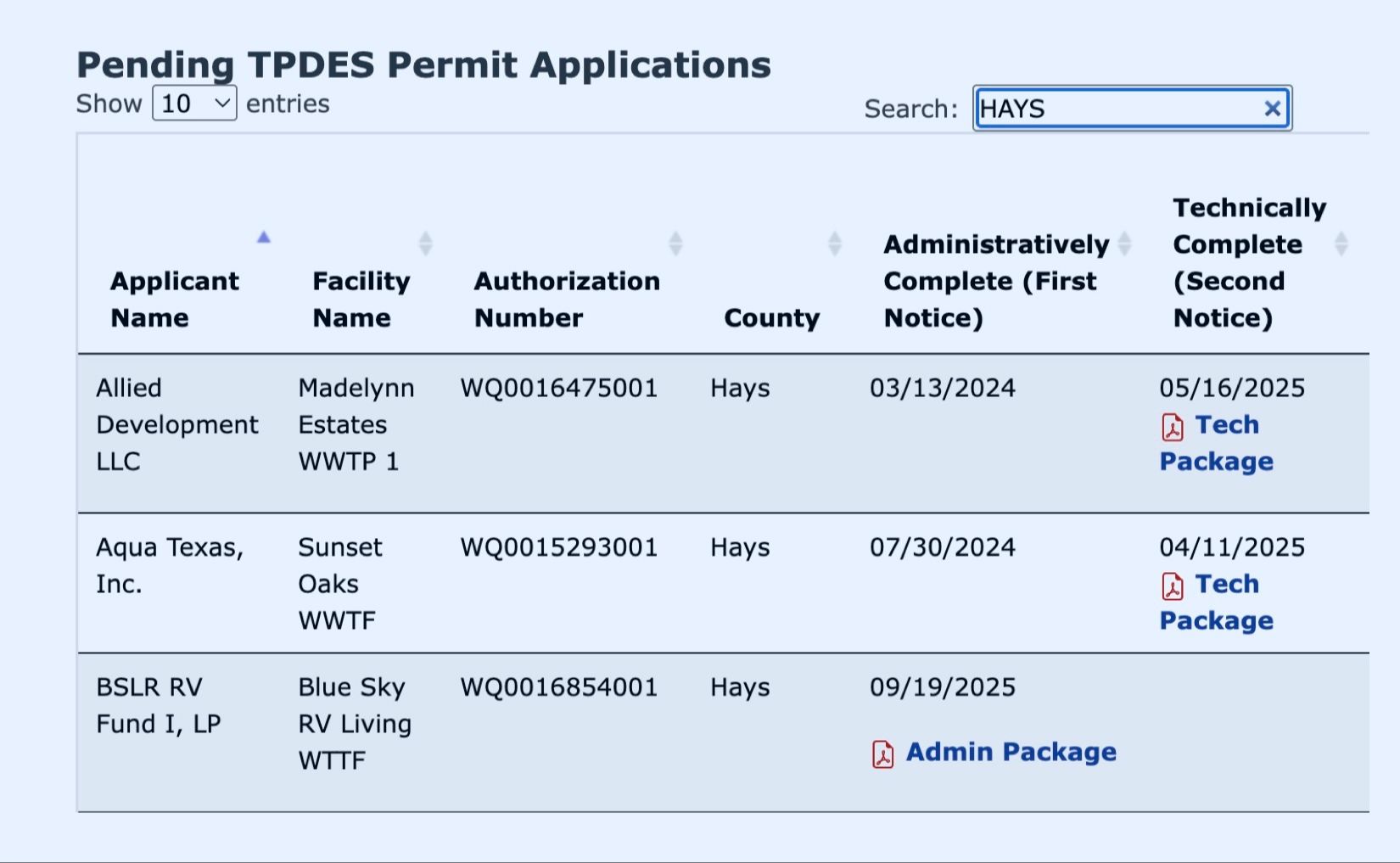
How to navigate the results page:
All wastewater permits have a unique WQ authorization number (WQ = Water Quality). You’ll need this number later to submit and find online comments on a permit application.
The applicant’s name will often be different from the project’s name. For example, Allied Development LLC is the applicant for the Madelynn Estates discharge permit.
Search for permit applications by county if you don’t know an applicant’s name or WQ number. For example, the Allied Development application shows up in a search for Hays County.
The initial application document is in the Admin Package PDF. The draft permit prepared by TCEQ’s staff is in the Tech Package PDF. Click on the link to download a package. (These document packages haven’t been posted for all applications currently listed in the Pending Permits section.)
3) Filing Comments on a Pending Permit Application
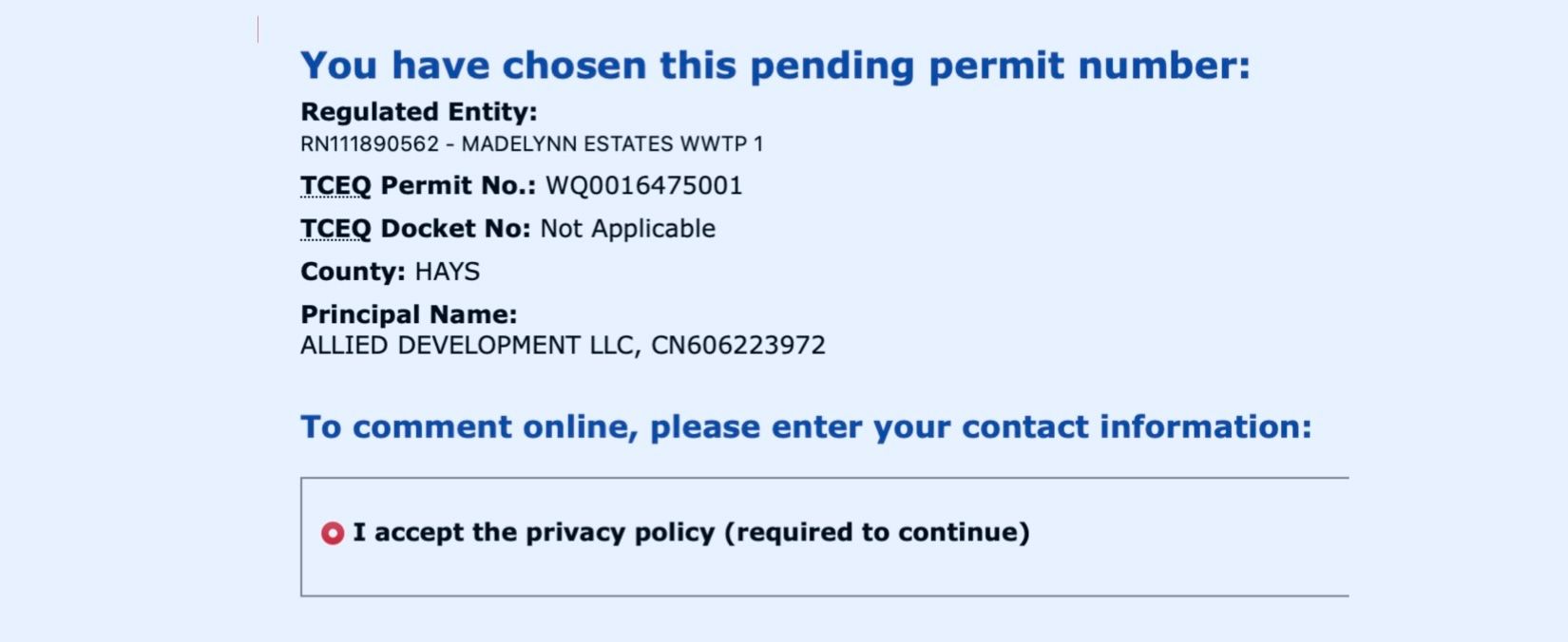
Go to TCEQ's Comments on a Pending Permit Application and enter the WQ number for the application (if you don’t have the WQ number, you can look it up in the Pending Permit section, above).
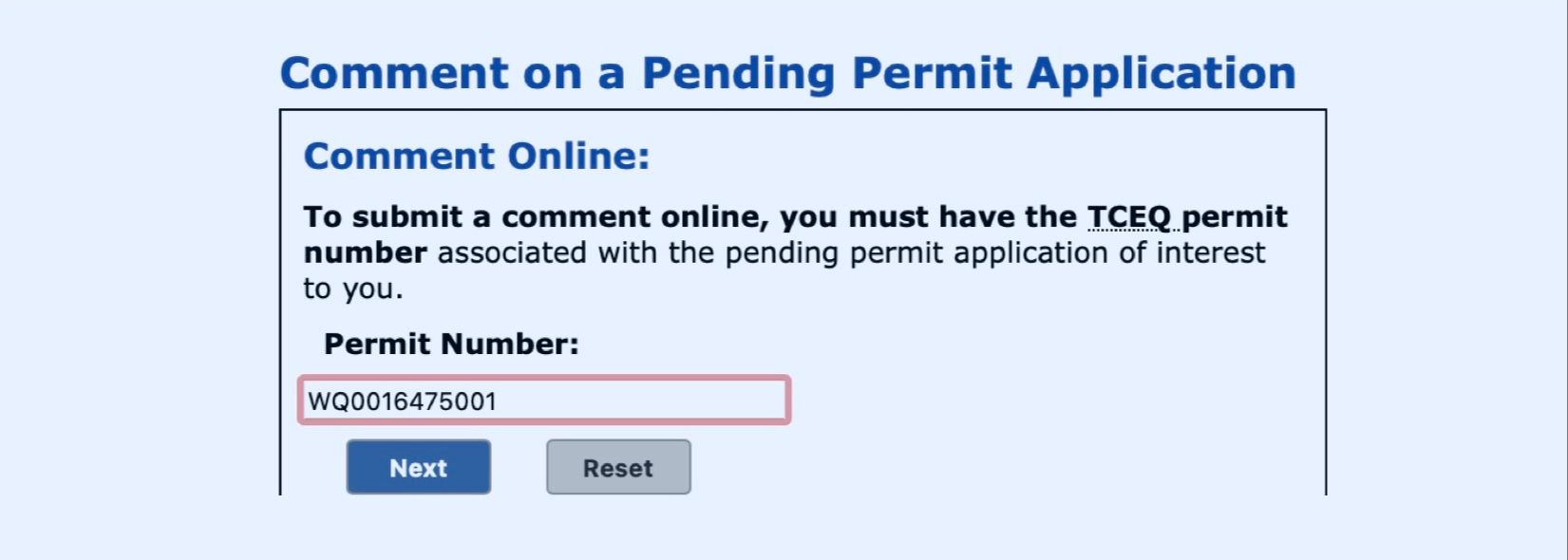
At the top of the next page (see below), look at the names to make sure that you’ll be commenting on the right application. Click on the dot next to “I accept the privacy policy,” and then fill in your personal information.
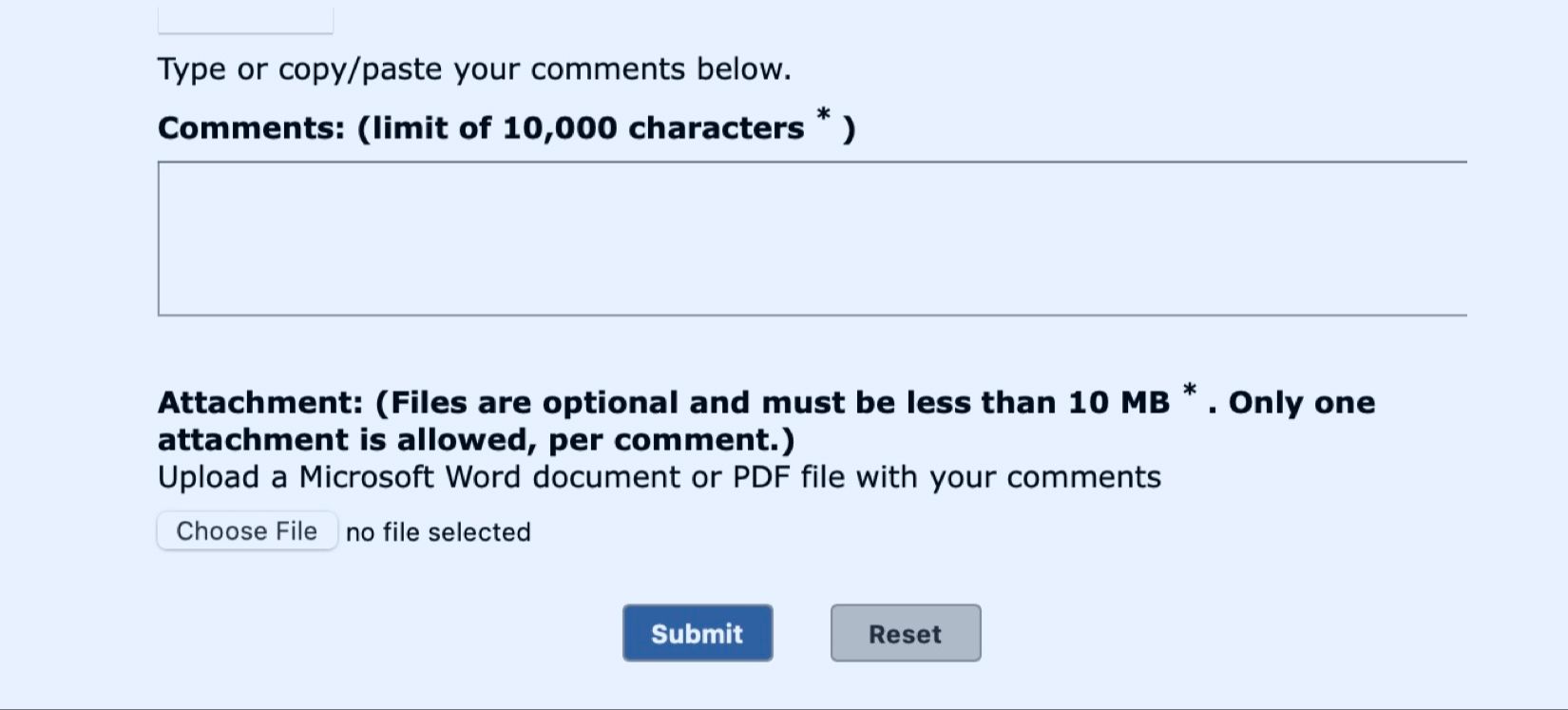
Now you’re ready to enter your comments. You can either type your comments in the box (see below), copy your text from another document and paste it into the box, and/or attach your comments as either an MS Word doc or a PDF. Finally, click Submit. You’ll receive an automated email from TCEQ confirming that your comments have been received.
4) Looking up permit comments in the Commissioners Integrated Database
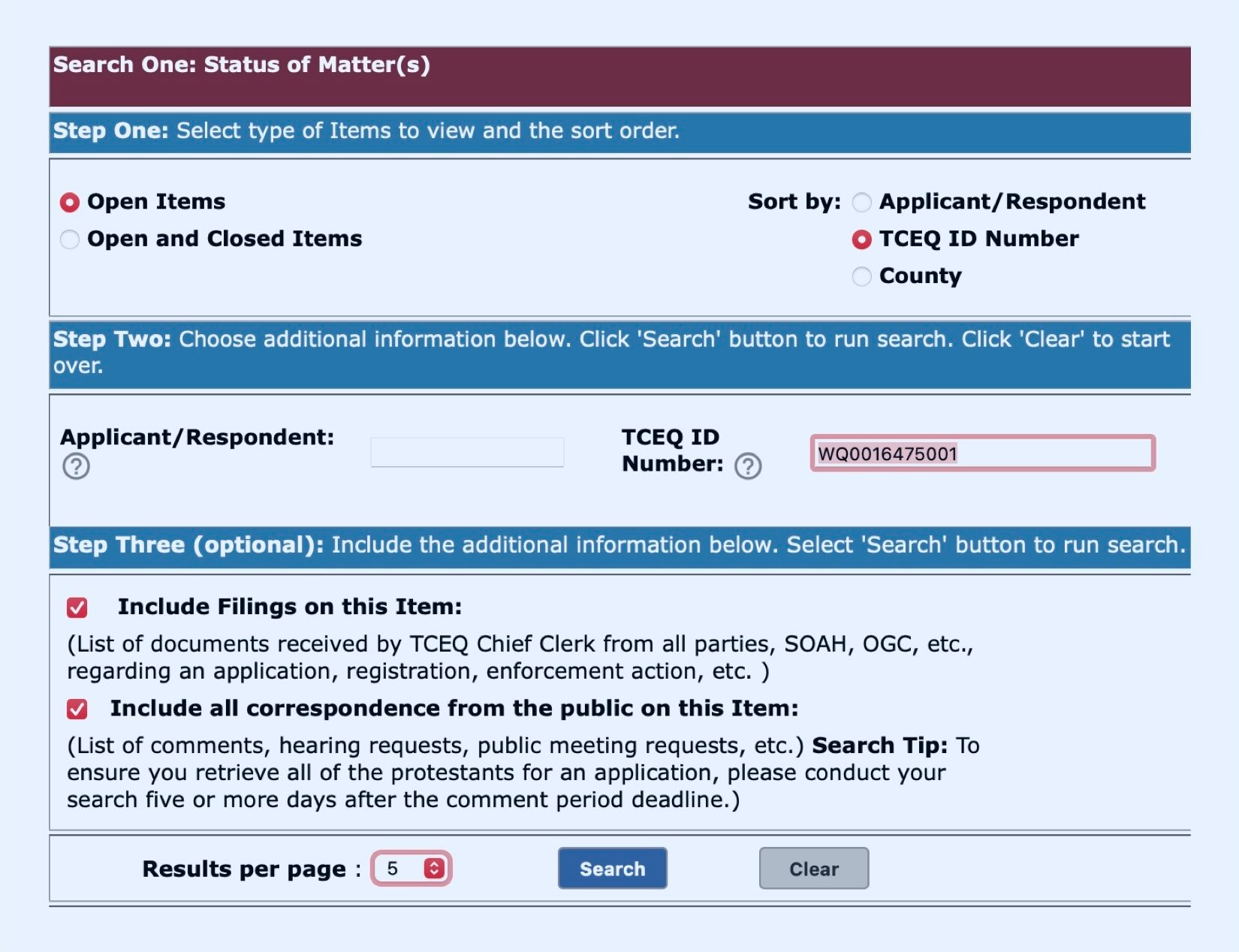
If you want to look up the comments submitted on a specific permit application (including your own comments), go to the Commissioners Integrated Database and then for:
• Sort by, click on TCEQ ID Number
• TCEQ ID Number, enter the WQ number for the permit application
• Step 3, click on the boxes for Include Filings and Include All Correspondence
• Click on Submit
Two sets of results will be displayed (see below). The first shows all actions that TCEQ’s staff have taken on the permit application. (While some of these actions will be linked to a document, the better and easier way to get all of TCEQ’s documents on an application is to search in Pending Permits — see our step #3 above.
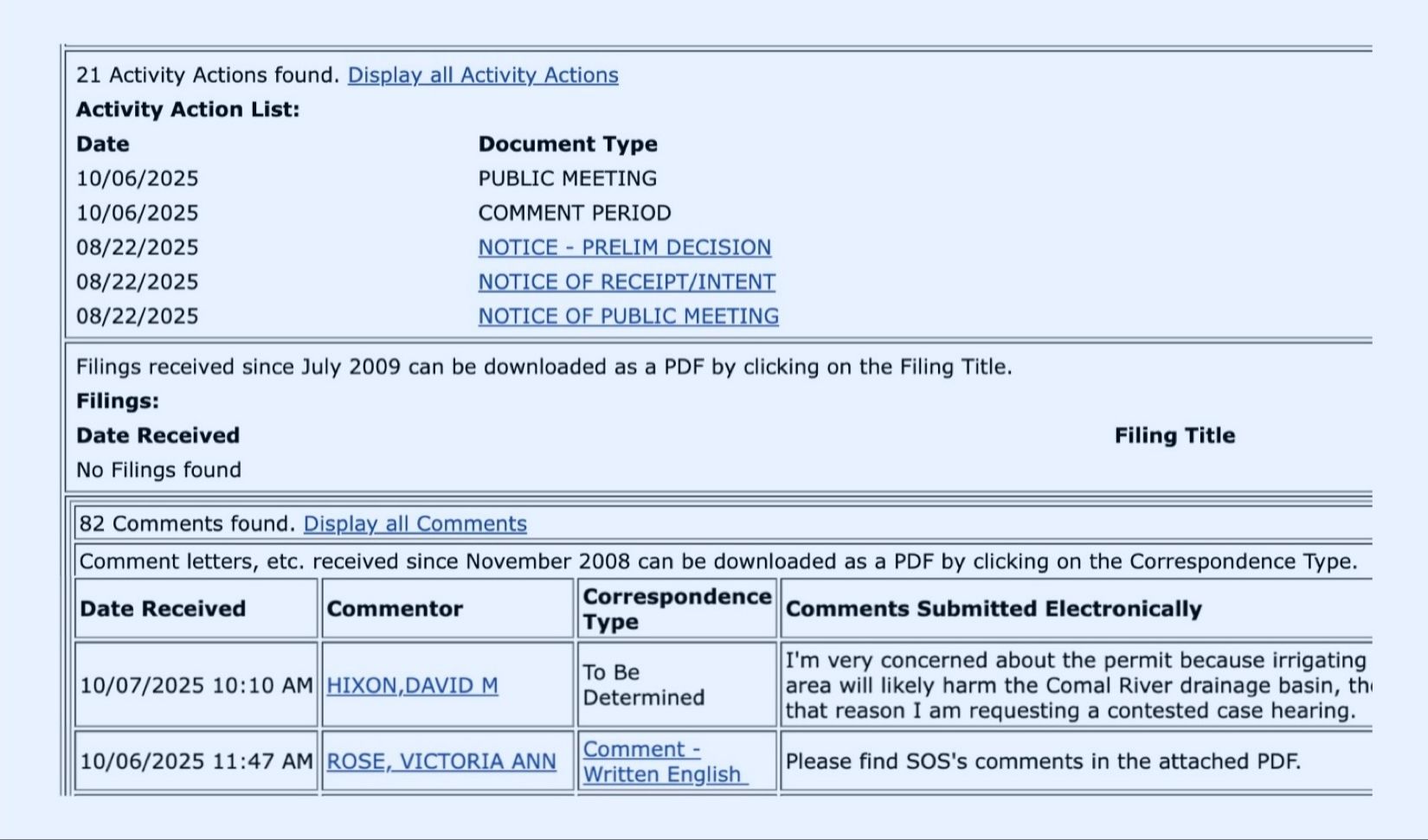
The second set of results shows all of the public comments that have been submitted to date on the application. If comments were only typed into the comment form, they will be displayed as text on this page. If comments were submitted as a PDF or Word document, they will be linked in the Correspondence Type column. Click on the link to download the document to your device. In the example below, click on Comment - Written English to download the PDF comments submitted for Save Our Springs Alliance by Victoria Ann Rose.
5) Tracking activities on the Calendar of Permit Meetings & Hearings
The Calendar of Permit Meetings & Hearings lists all currently scheduled public meetings and contested case hearings for all water quality and air quality permits in the state. This is an easy way to look up meeting details for the specific permit that you’re following. It’s also a useful feature if you’re following multiple permits.